Maintenance
How to Build a Preventive Maintenance Plan for CNC Machines
AMAG Team8 min read
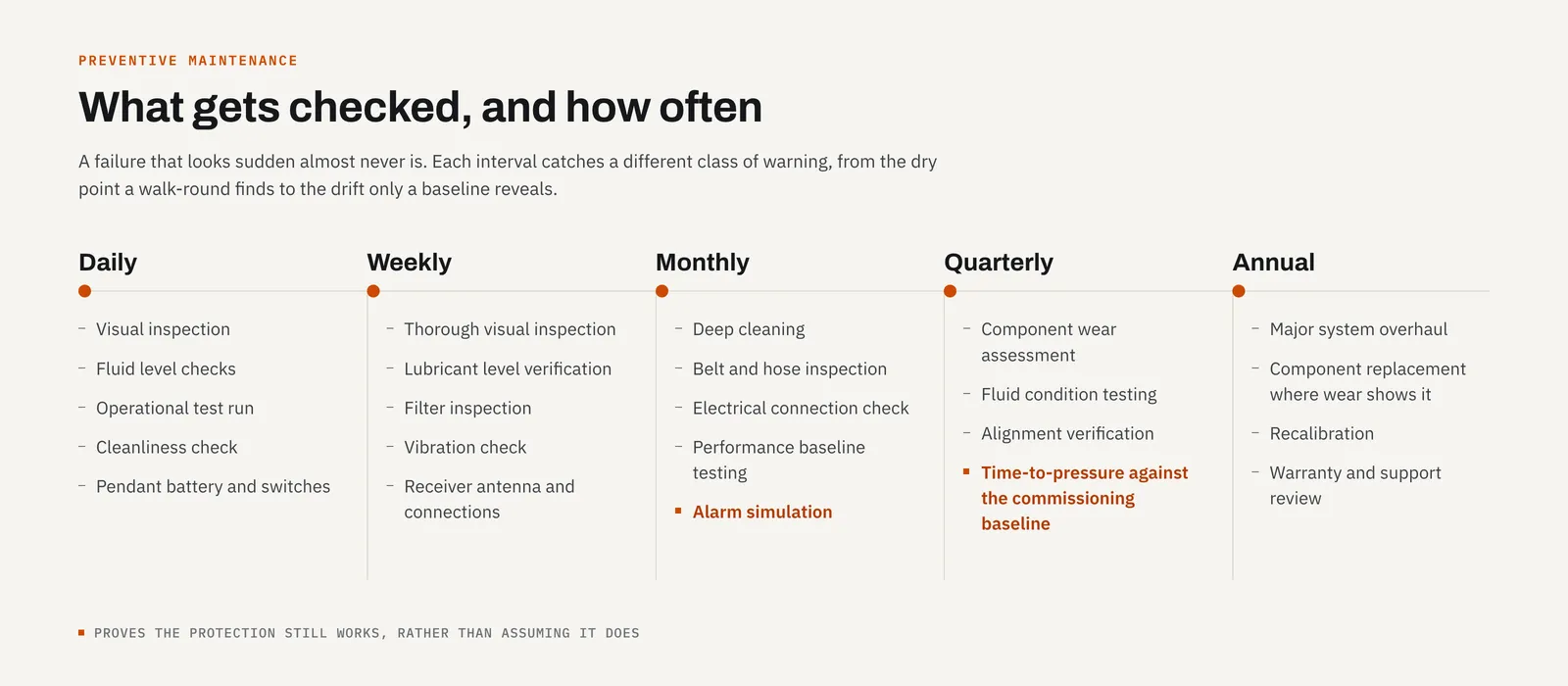
The difference between a well-run facility and one plagued by unexpected breakdowns often comes down to one thing: preventive maintenance. Here are essential strategies for keeping your industrial equipment running smoothly, with a focus on the two systems that quietly cause most avoidable downtime: lubrication and, increasingly, the wireless controls that have replaced wired pendants on the shop floor.
The Cost of Neglecting Maintenance
Unplanned downtime is more expensive than the repair bill alone suggests. A breakdown mid-shift means the machine stops producing, the job in progress may be scrapped or reworked, and the fix often happens under time pressure with whatever parts and labour are available rather than what's cheapest. Compare that to a scheduled repair: parts ordered in advance, the right technician booked, and the machine down during a planned window rather than in the middle of a production run.
The deeper cost is what unplanned failures do to the equipment itself. Most catastrophic failures don't start catastrophic: they start as a minor issue that preventive maintenance would have caught early. A dry lubrication point becomes a scored way. A bearing running slightly hot becomes a seized spindle. Caught early, each of these is a routine fix. Left alone, each becomes a much larger repair, and sometimes a replacement. When it's the pump or distributor itself that's worn out, see our centralised lubrication system replacements for how we pair a new pump and distributor to a machine that already has one installed, starting from a nameplate photo of what's coming out.
Core Preventive Maintenance Practices
1. Regular Lubrication Schedules
Why It Matters: Lubrication failures are among the most preventable causes of equipment wear, and also among the easiest to miss, because a starved point doesn't always announce itself. On a volumetric distributor system, each outlet meters independently, so one dry point can coexist with a perfectly healthy pressure gauge, and nobody notices until a bearing runs hot or a way develops a scar. That's the case for treating lubrication as a monitored system, not a fill-and-forget task.
Best Practice:
- Use automated lubrication systems for consistency rather than relying on an operator's memory
- Follow manufacturer specifications for lubricant type, viscosity grade, and interval: a distributor or pump built for one viscosity window will stall or under-perform outside it, as covered in our machine tool oil viscosity guide
- Confirm the reservoir level switch and, where fitted, the pressure switch are actually wired into the alarm chain: a switch that isn't wired in is decoration, not protection
- Record the system's healthy time-to-pressure at commissioning as a baseline; both a system that pressurises too slowly and one that pressurises almost instantly indicate a fault, not normal variation
- Keep detailed lubrication records, including dose and interval settings, so a later change is a documented decision rather than something nobody remembers making
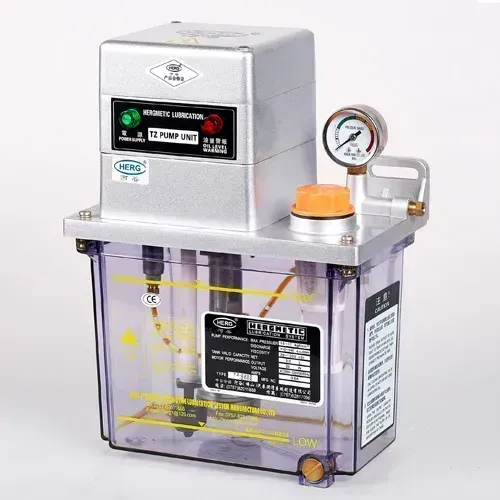 A level switch and, where fitted, a pressure switch are what turn "the reservoir is low" into an alarm the machine actually reacts to, rather than something a technician has to notice on a walk-round.
2. Visual Inspections
Conduct weekly or daily inspections for:
- Leaks: Oil, coolant, or hydraulic fluid, including wet spots below hose runs that a quick glance from above would miss
- Unusual Sounds: Grinding, squealing, or rattling, particularly from bearings and gearboxes
- Temperature: Overheating equipment, connections, or motor housings
- Vibration: Increased or unusual vibration patterns, often the earliest sign of a bearing or alignment problem
- Wear: Visible wear on belts, hoses, or components, and on wireless pendants specifically, cracks or chips in the housing from being set down or dropped
3. Cleanliness and Contamination Control
Run enough troubleshooting calls on lubrication systems and a pattern emerges: most jammed metering valves and blocked distributor outlets trace back to contamination entering through the reservoir's top: a dirty transfer container, the wrong funnel, a lid left open over a dusty shift. The fix is boring discipline, not exotic engineering:
- Keep equipment and work areas clean
- Use dedicated, clean containers for topping up lubricant, never the nearest open drum
- Keep reservoir lids closed except while actively filling
- Use proper filtering systems and change air and fluid filters on schedule
- Maintain proper ventilation to reduce airborne dust settling into open reservoirs
4. Operator Training
Well-trained operators catch issues early, often before an instrument would:
- Teach operators to recognise warning signs: an unusual sound, a hot housing, a pendant that feels sluggish
- Establish clear reporting procedures for anomalies so a noticed problem actually reaches maintenance
- Provide documentation and checklists rather than relying on memory
- Create a culture of preventive thinking, where flagging something odd is encouraged rather than seen as slowing production
5. Thermal Monitoring
Temperature is one of the most reliable indicators of equipment health, because friction and electrical resistance both show up as heat before they show up as failure:
- Use thermal cameras or handheld thermometers to spot hotspots during routine rounds
- Monitor bearing temperatures on spindles and rotating equipment
- Track motor and spindle temperatures against their normal running baseline
- Investigate any unexplained temperature increase promptly rather than waiting for the next scheduled check
6. Wireless Control Maintenance
Shops that have moved to wireless MPG controls pick up one new, small daily habit in exchange for removing a cable-management problem entirely. At the start of each shift: power the pendant on and confirm it responds immediately, work the buttons and axis selector to confirm they feel right with no sticking, and glance over the housing for cracks. Weekly, wipe down the housing and inspect the receiver's antenna connections for corrosion or looseness. The pendant runs on standard AA batteries: keep a spare set at the machine and swap them at the first sign of weak response rather than letting it die mid-setup. Our wireless MPG maintenance guide covers the full daily, weekly, and monthly schedule, and keeping wireless controls reliable on a noisy shop floor covers receiver placement and RF interference, which cause more "wireless problems" than the hardware itself does.
Creating a Maintenance Schedule
Daily Tasks
- Visual inspection
- Fluid level checks
- Operational test run
- Cleanliness check
- Wireless pendant battery and switch check, if equipped
Weekly Tasks
- Thorough visual inspection
- Lubrication application and level verification
- Filter inspection
- Equipment vibration check
- Wireless receiver antenna and connection inspection
Monthly Tasks
- Deep cleaning
- Belt and hose inspection
- Electrical connection check
- Performance baseline testing
- Alarm simulation: lift the reservoir float or otherwise trigger a protective switch and confirm the machine actually reacts
Quarterly Tasks
- Component wear assessment
- Fluid condition testing
- Alignment verification
- System efficiency evaluation, including time-to-pressure on lubrication circuits against the commissioning baseline
Annual Tasks
- Major system overhaul
- Component replacement, where wear assessments indicate it
- Recalibration
- Warranty/support review
Documentation is Critical
Maintain detailed records of:
- All maintenance activities, including which switches and alarms were tested and confirmed working
- Parts replaced and costs
- Downtime incidents and their root cause, not just the symptom
- Performance metrics such as time-to-pressure and lubricant consumption
- Repair history
This data helps identify patterns (a point that keeps running dry, a receiver location that keeps producing dead zones) and justifies future investment in the fix rather than repeating the same repair indefinitely.
Invest in Quality Systems
Modern automated lubrication and wireless control systems reduce the manual maintenance burden rather than adding to it:
- Automatic lubrication systems replace operator memory with metered, monitored delivery
- Wireless MPG controls remove a cable's wear and trip-hazard failure modes entirely
- Level and pressure switches, properly wired into the alarm chain, catch failures before they become breakdowns
- Well-specified components, matched correctly to viscosity, grease grade, and pressure class, fail far less often than mismatched ones
Return on Investment
Preventive maintenance pays for itself in ways that compound over time: fewer emergency repairs at premium cost, less unplanned downtime disrupting production schedules, longer service life from components that were never asked to run dry or overheat, more consistent product quality, and a workforce that isn't routinely dealing with breakdowns. None of this requires expensive equipment: most of it is monitoring, documentation, and the discipline to act on what the monitoring shows.
Conclusion
The pattern across every practice above is the same: a failure that looks sudden almost never is. A dry lubrication point, a switch that was never wired into the alarm chain, a wireless pendant left running on a dying battery: each gives warning before it costs you a shift. Preventive maintenance is the discipline of catching that warning instead of the breakdown.
If your lubrication system doesn't have its level and pressure switches wired into something that actually reacts, or you're not sure what your machine's normal time-to-pressure baseline is, tell us about your setup and we'll help you close that gap.
Related articles
Maintenance
Keeping Wireless Controls Reliable on a Noisy Shop Floor
Why machine shops are hard on radio links, and how receiver placement, cable routing, and honest battery habits keep a wireless pendant dependable.
Maintenance
Commissioning a Lubrication System: From First Fill to First Cycle
A step-by-step commissioning sequence for centralised lubrication, from a clean first fill to proven oil delivery at every single point.
Maintenance
Troubleshooting a Centralised Lubrication System, Fault by Fault
A symptom-first guide to centralised lubrication faults: pressure problems, dry points, stalled progressive blocks, and alarms that never fire.