AMAG CNC Blog
Articles on lubrication systems, wireless controls, and industrial equipment
Found 23 posts
Technical Guides
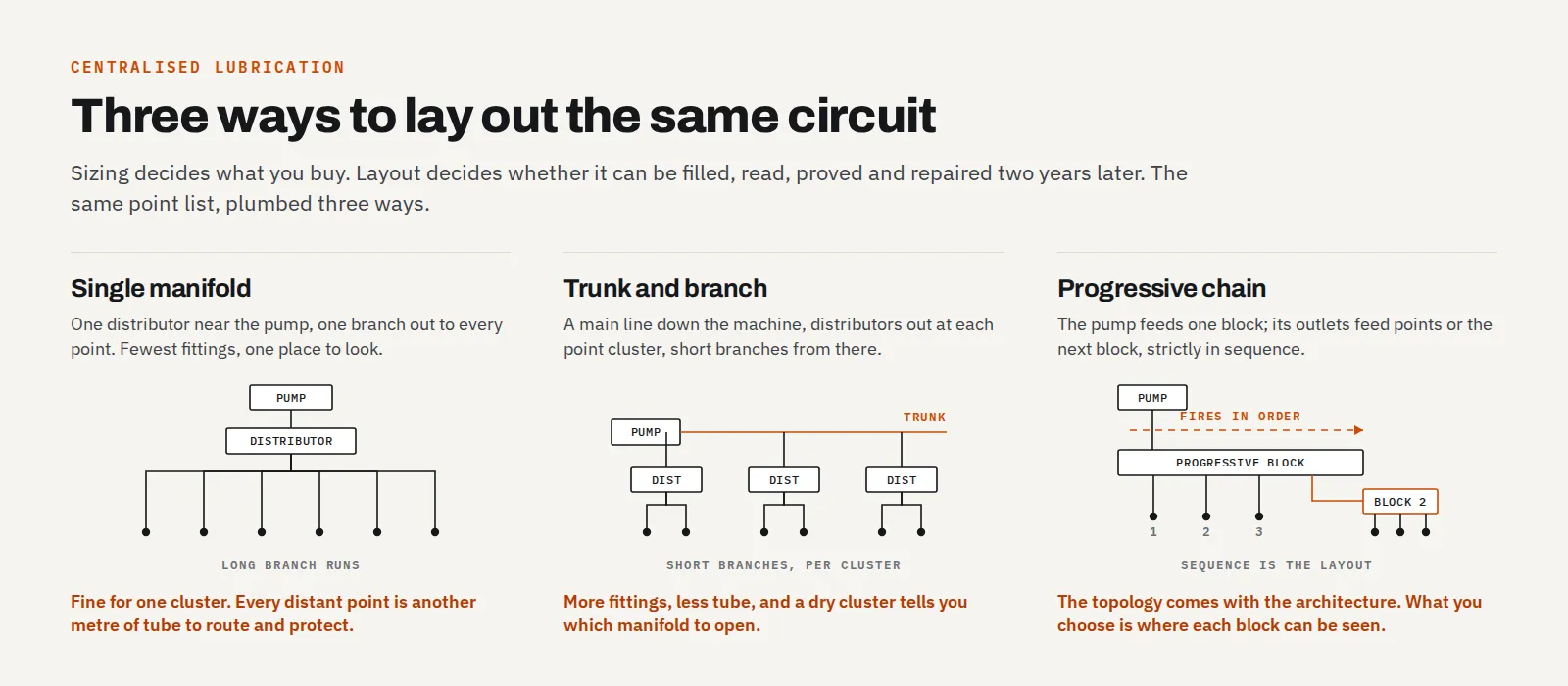
CNC Lubrication System Layout: Where the Pump, Lines and Distributors Go
Our sizing walkthrough ends with a bill of materials: seventeen points, 2.9 ml a cycle, three manifolds, one TZ pump. It lists layout as a step in the method and then doesn't do it, because sizing and layout are genuinely different jobs. Sizing decides what you buy. Layout decides whether...

Buying Guide
Wireless MPG Pendant vs. Wired Handwheel: Which Belongs on Your Machine
Most comparisons of this pair start from the wrong question. They treat wireless as the newer technology and wired as the thing it replaces, then list the advantages of being new. That framing produces a shopping list, not a decision. The useful question is narrower: where does the operator need...
Technical Guides
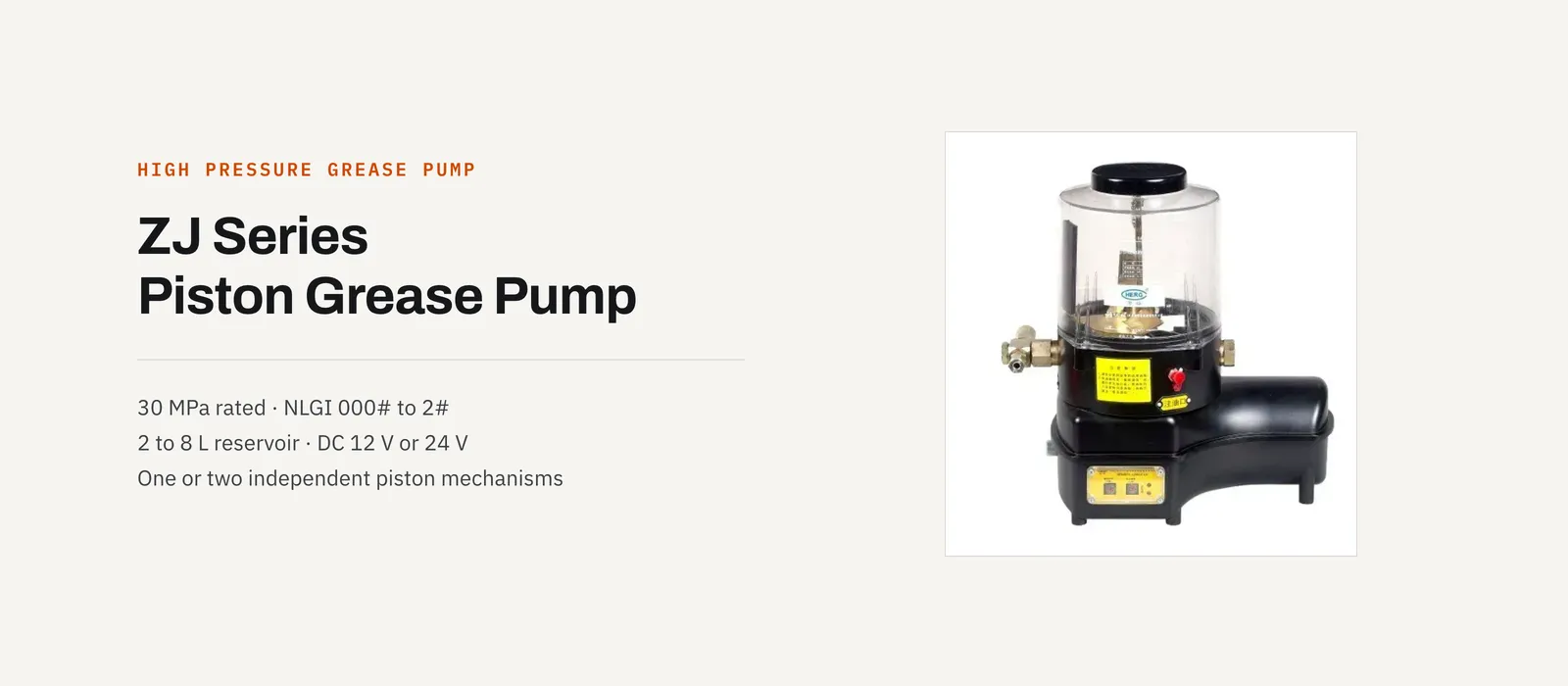
When a Centralised Grease System Can Run NLGI 2
The last time we wrote about grease grade, the sentence was blunt: centralised systems run NLGI 000 and 00, and putting cartridge-thick NLGI 2 into one is how a maintenance department spends an afternoon opening packed lines. That sentence is true for the circuit it was written about: a GM...
Technical Guides
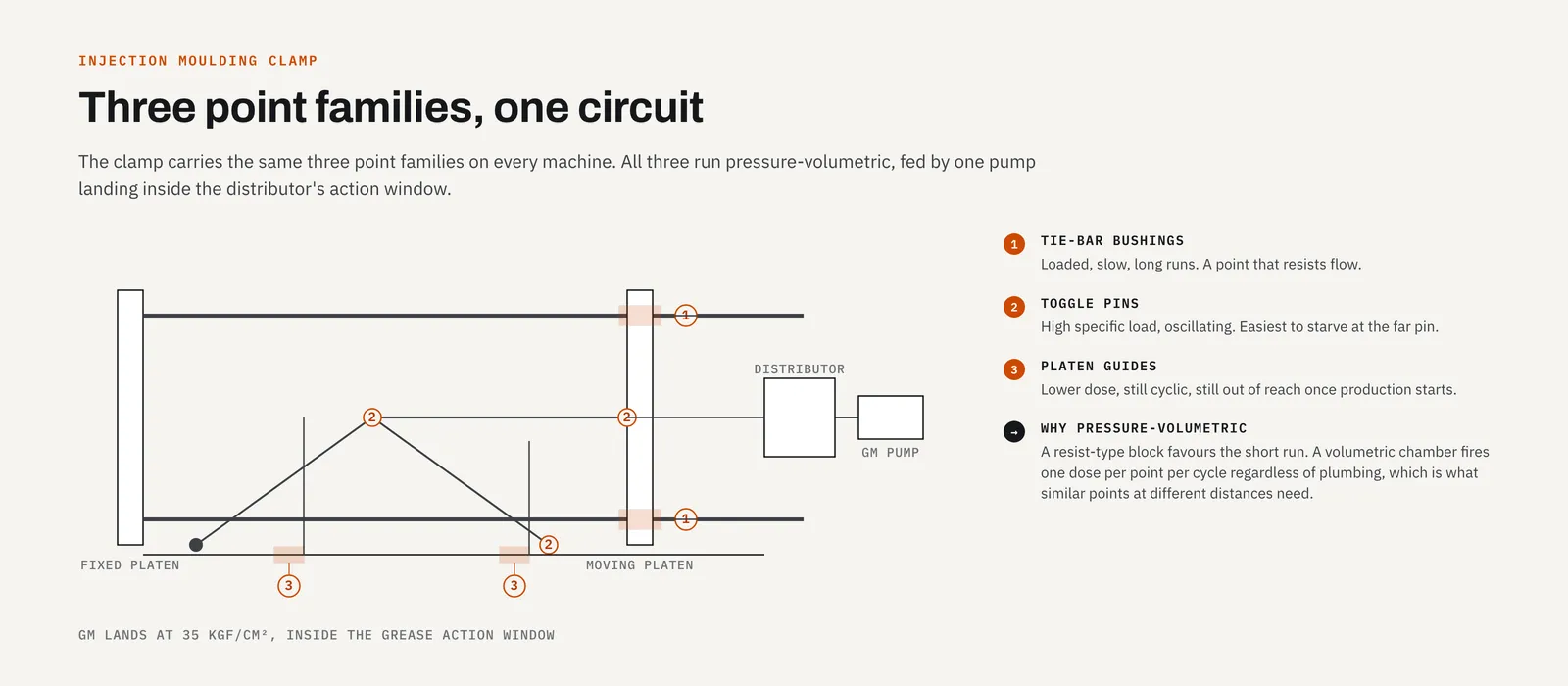
How to Lubricate an Injection Moulding Machine: Tie Bars, Toggles, and Platens
The injection unit on a moulding machine is a plastic problem. The clamp is a lubrication problem. Tie-bar bushings, toggle pins and platen guides take the locking force, cycle every shot, and sit in places a grease gun reaches badly once the guards are on. A machine that is otherwise...
Maintenance
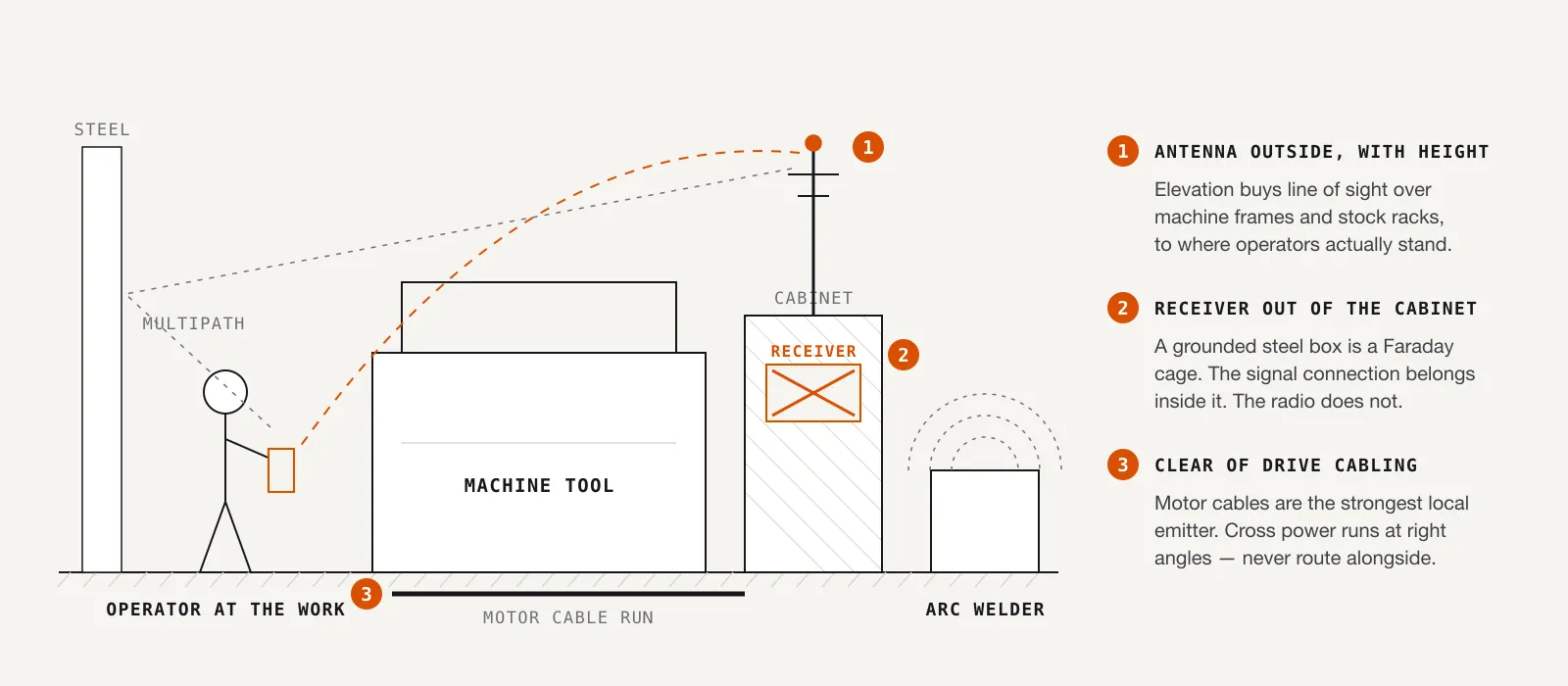
Keeping Wireless Controls Reliable on a Noisy Shop Floor
A machine shop is close to a worst-case environment for radio. Pretending otherwise is how wireless controls get a bad name: a pendant installed carelessly drops out at the worst moment, and the shop concludes wireless doesn't belong on a machine tool. The honest version is different. The physics of...
Technical Guides
How to Set Up a Wireless MPG: Workflows That Actually Change
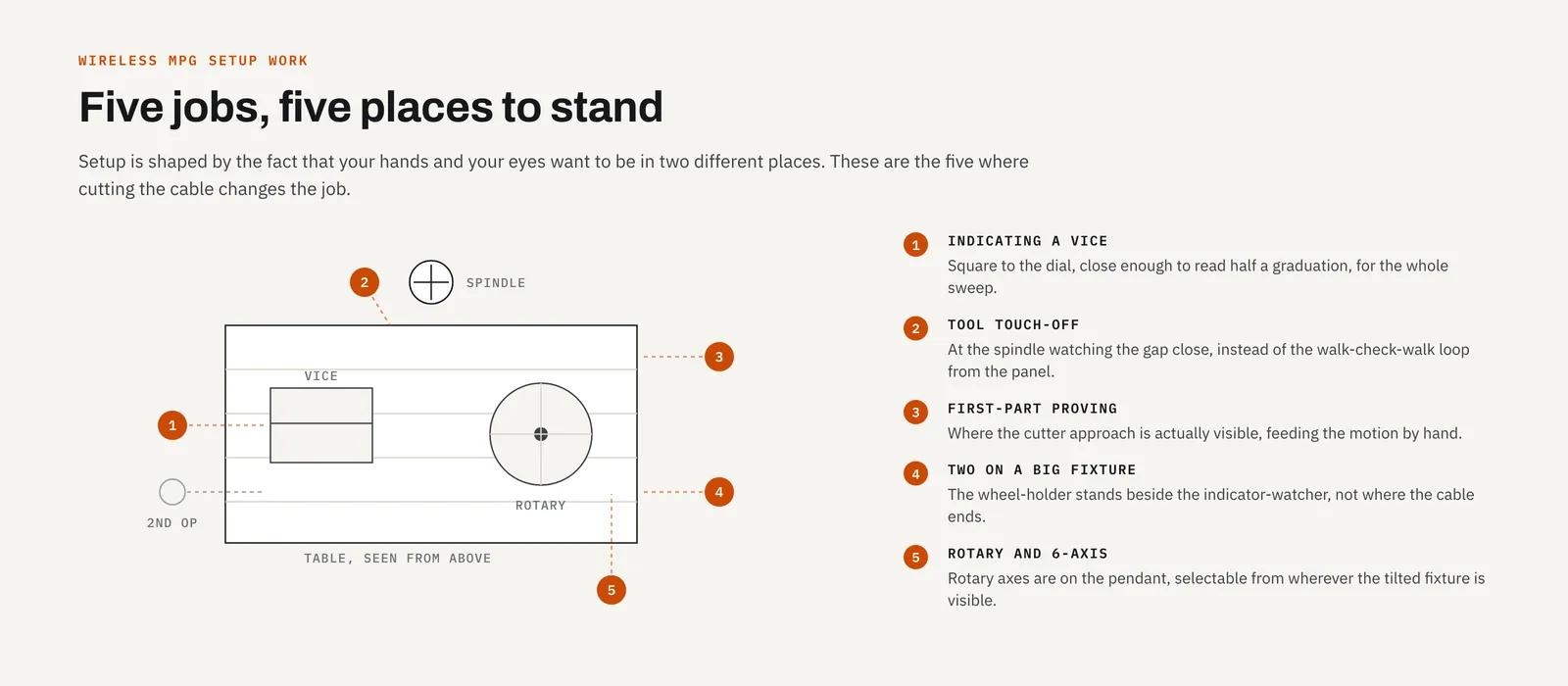
The obvious pitch for a wireless pendant is "no cables," and that's true as far as it goes. But nobody buys a machine control because of what it lacks. The real question is where being able to stand in the right place changes how the work gets done. Certain setup...
Technical Guides
How a Manual Pulse Generator Works: From Detent Click to Axis Move
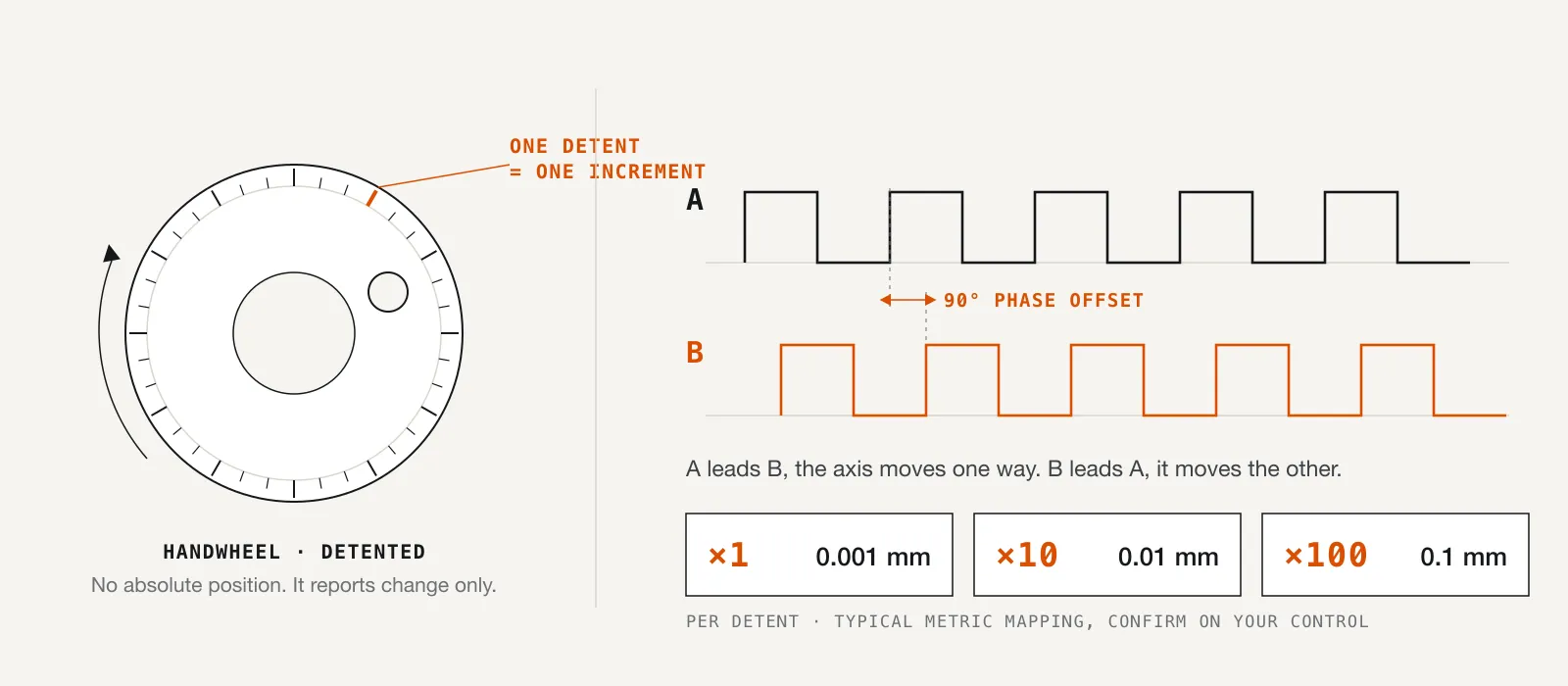
Watch a good setup machinist bring a cutter down towards a reference surface and the jog buttons barely get touched. For anything that matters, the last half millimetre of an approach, sweeping in a vice, splitting an edge, the hand goes to the wheel. The manual pulse generator is the...

Maintenance
Commissioning a Lubrication System: From First Fill to First Cycle
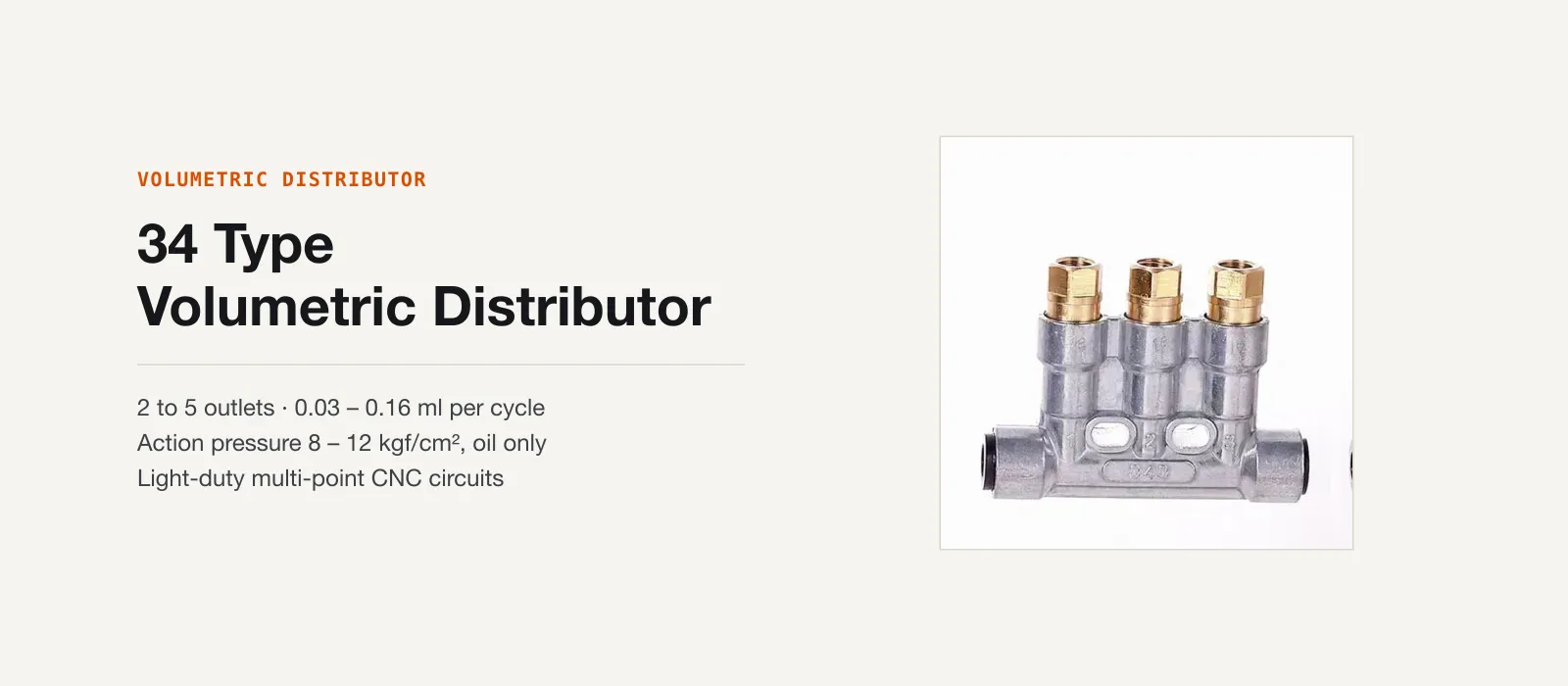
The hour spent commissioning a lubrication system decides whether it protects the machine or just decorates it. A system filled clean, bled solid, and proven point by point will do its job for years. One bolted on and switched on will look identical (pump humming, gauge climbing) while a point...
Maintenance
Troubleshooting a Centralised Lubrication System, Fault by Fault
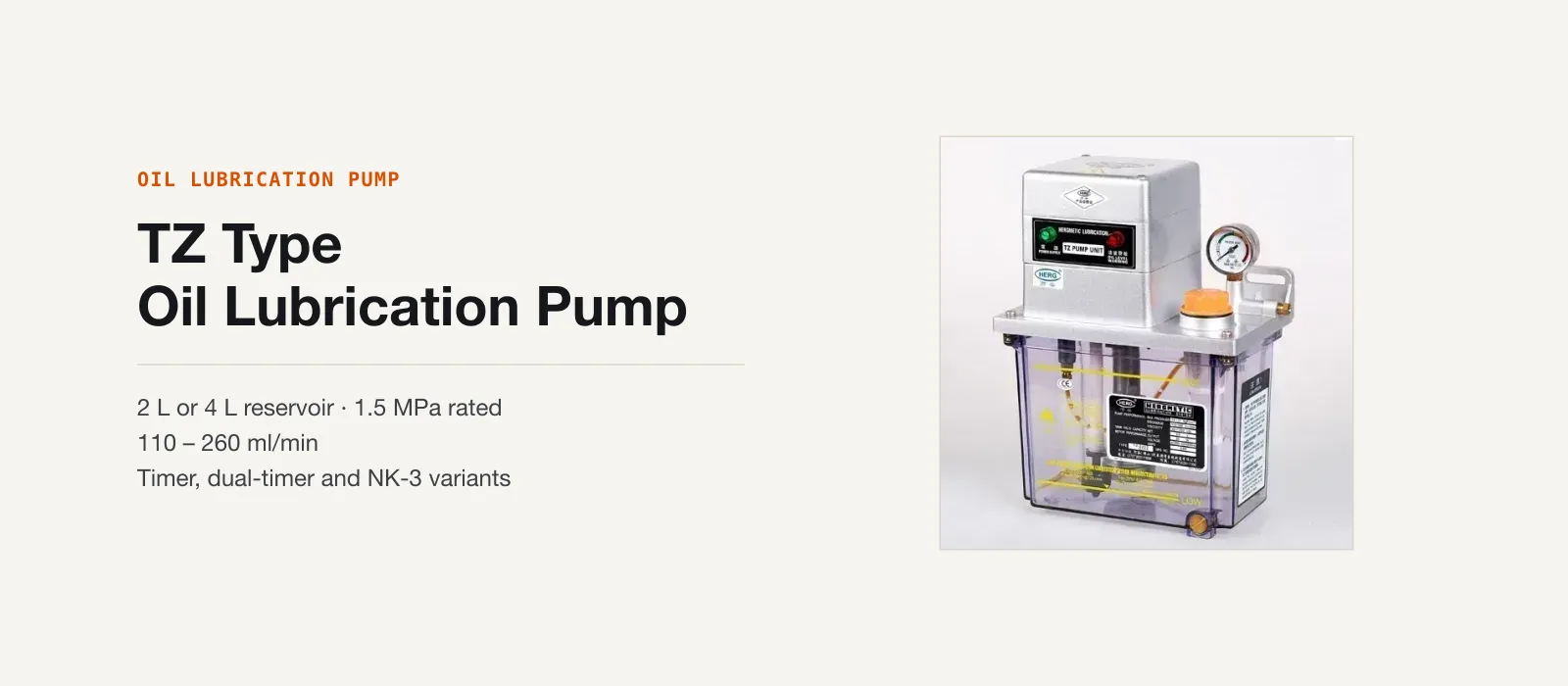
Lubrication systems are simple machines, which is why symptom-first troubleshooting works well on them. There are only a handful of things a pump-line-distributor system can do wrong, and each leaves a distinct signature. Start from what you observe, not components. Don't pull the pump apart just because it looks mechanical....
Technical Guides
Total-Loss Lubrication: Setting Intervals and Doses That Make Sense
The way-lube system on most CNC machine tools is a total-loss system, and the name means what it says. Fresh oil is metered to the ways and ballscrews, does its job once, and is lost. It gets scraped off by wipers, carried away on chips, or washed down by coolant...
Technical Guides
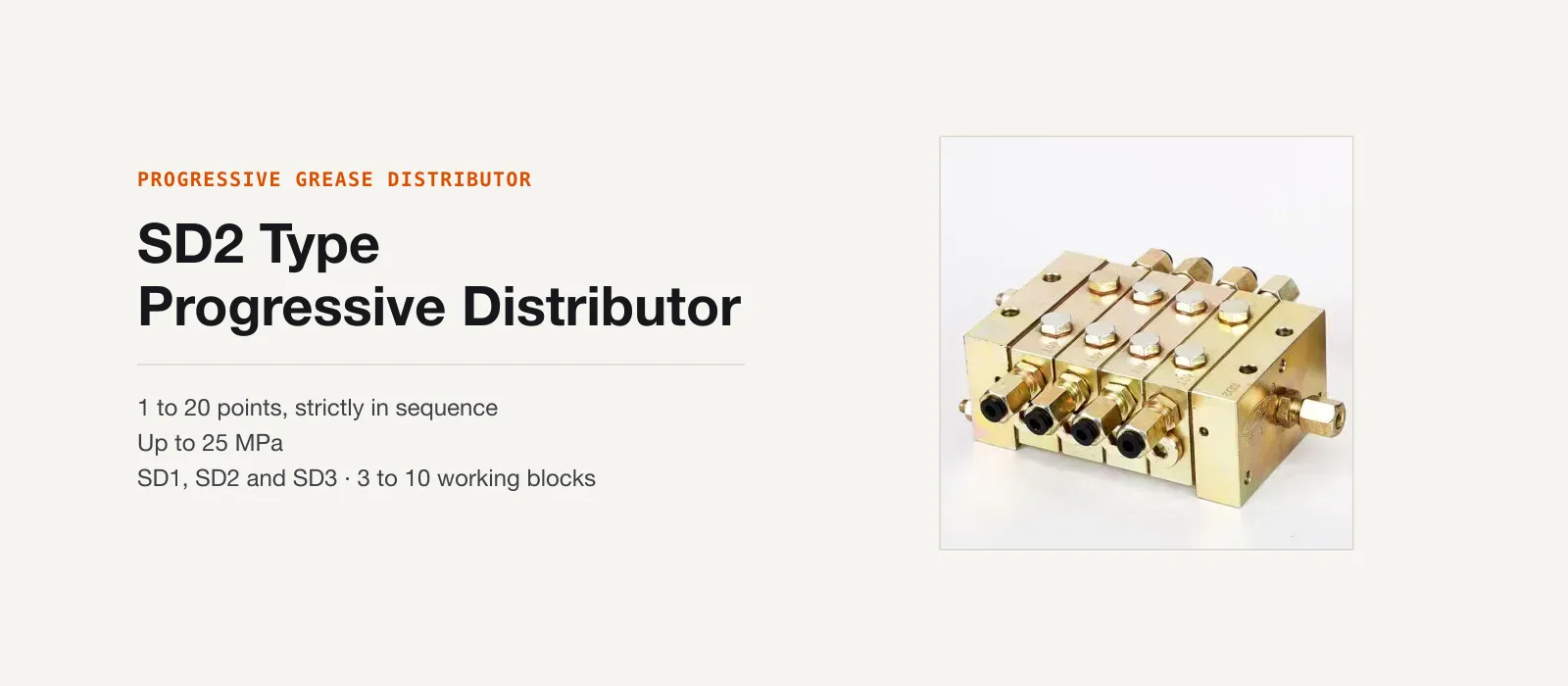
Progressive Distributors and PLC Monitoring: Lubrication You Can Prove
Most centralised lubrication systems ask you to take delivery on faith: the pump ran, the line reached pressure, so you assume every bearing got its dose. Usually that holds. The times it doesn't are the times that cost a way or a bushing, with nothing in a conventional system warning...
Maintenance
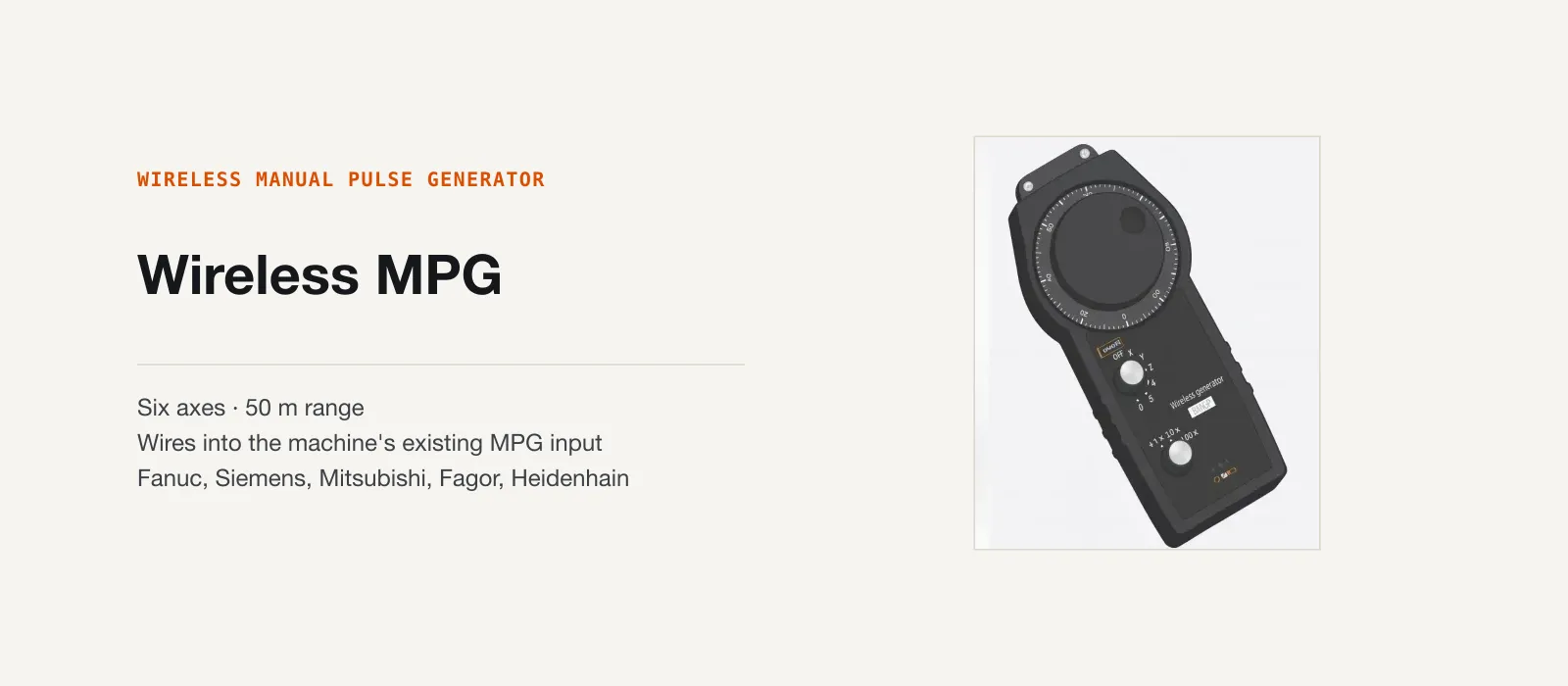
Wireless MPG Maintenance and Troubleshooting - Keep Your Controls Working
Wireless MPG systems are remarkably reliable, but like any electronic equipment, they benefit from routine care. This guide covers the maintenance and troubleshooting that's specific to the pendant and receiver as hardware: housing, buttons, connections, and the fault signatures that point at the transmitter rather than the radio link. For...
Technical Guides
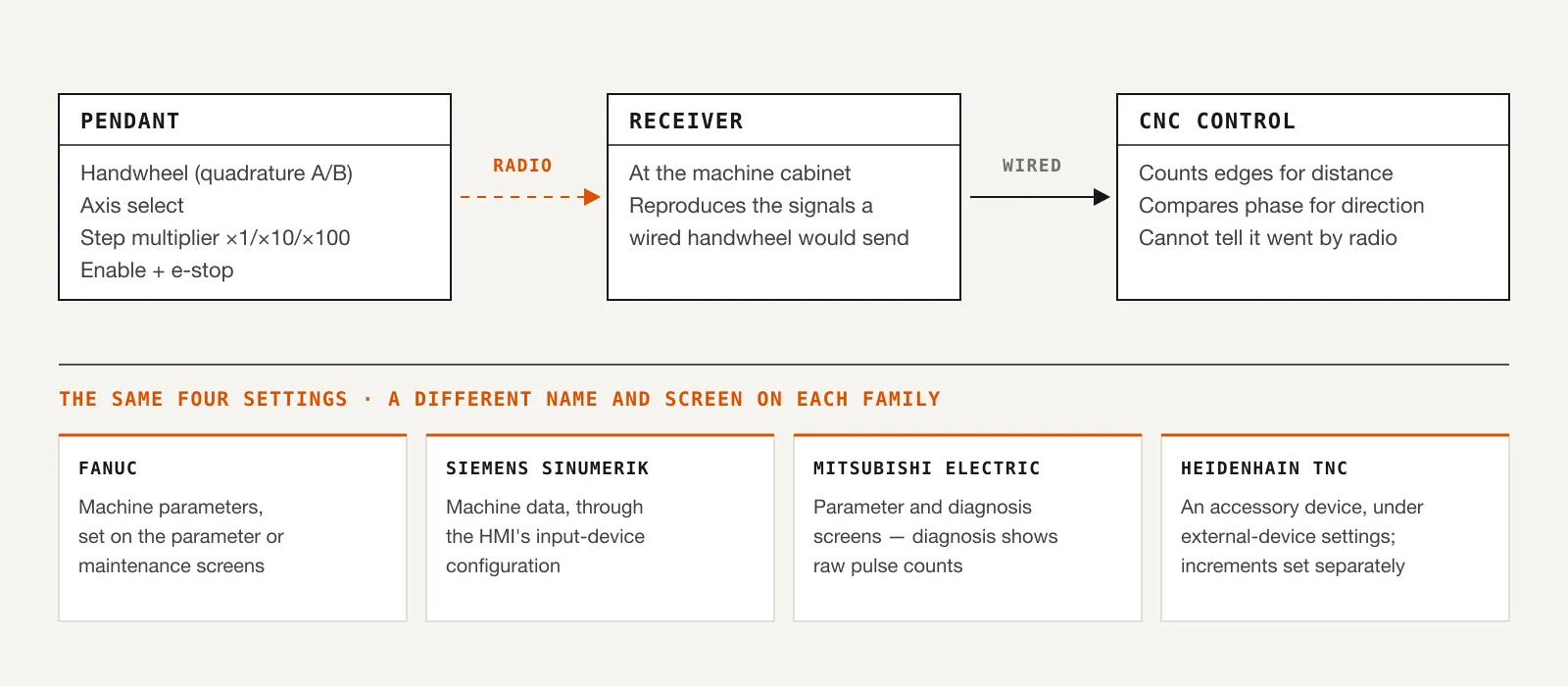
Wireless MPG Integration: What Actually Changes Between Fanuc, Siemens, Mitsubishi, Fagor, and Heidenhain
The AMAG Wireless MPG is compatible with Siemens, Fagor, Mitsubishi Electric, Fanuc, and Heidenhain controllers, and that compatibility claim covers real engineering rather than a marketing checkbox. To any of those controls, a properly integrated wireless pendant looks exactly like a wired handwheel: counts, direction, axis selection, and step multiplier...
Maintenance
Complete Guide to CNC Machine Lubrication Systems
A CNC machine has dozens of points that need a controlled film of oil or grease to keep running: spindle bearings, linear way guides, ballscrew nuts, tool changers, gearboxes, chucks. Miss one and the failure shows up as wear, not as a warning light: a way that scores, a ballscrew...
Product Updates
How Wireless MPG Controls Benefit Your Shop Floor
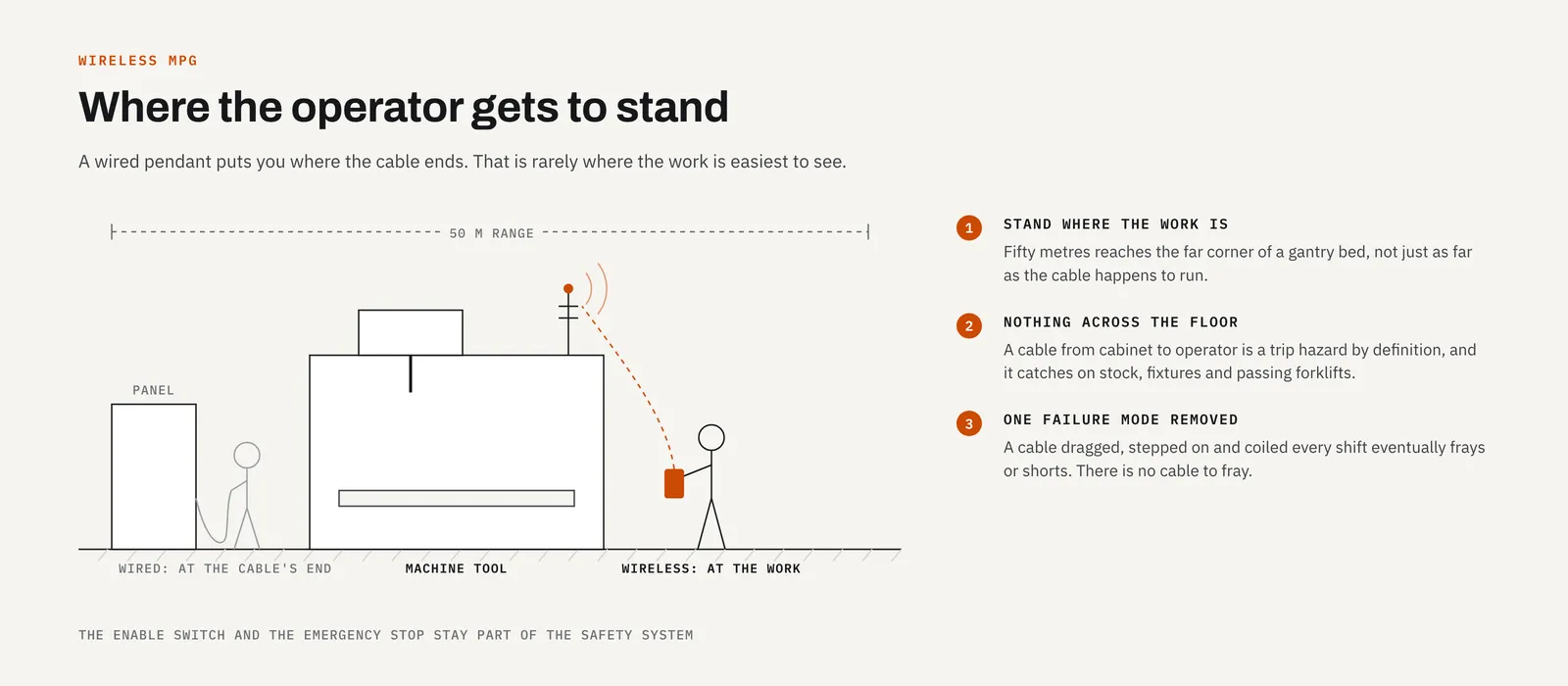
The evolution from wired to wireless manual pulse generators (MPG) represents a significant leap forward in CNC machine control. Let's explore why manufacturers are making the switch to wireless technology, what actually changes on the shop floor, and where the real gains come from rather than the marketing gloss. A...
Maintenance
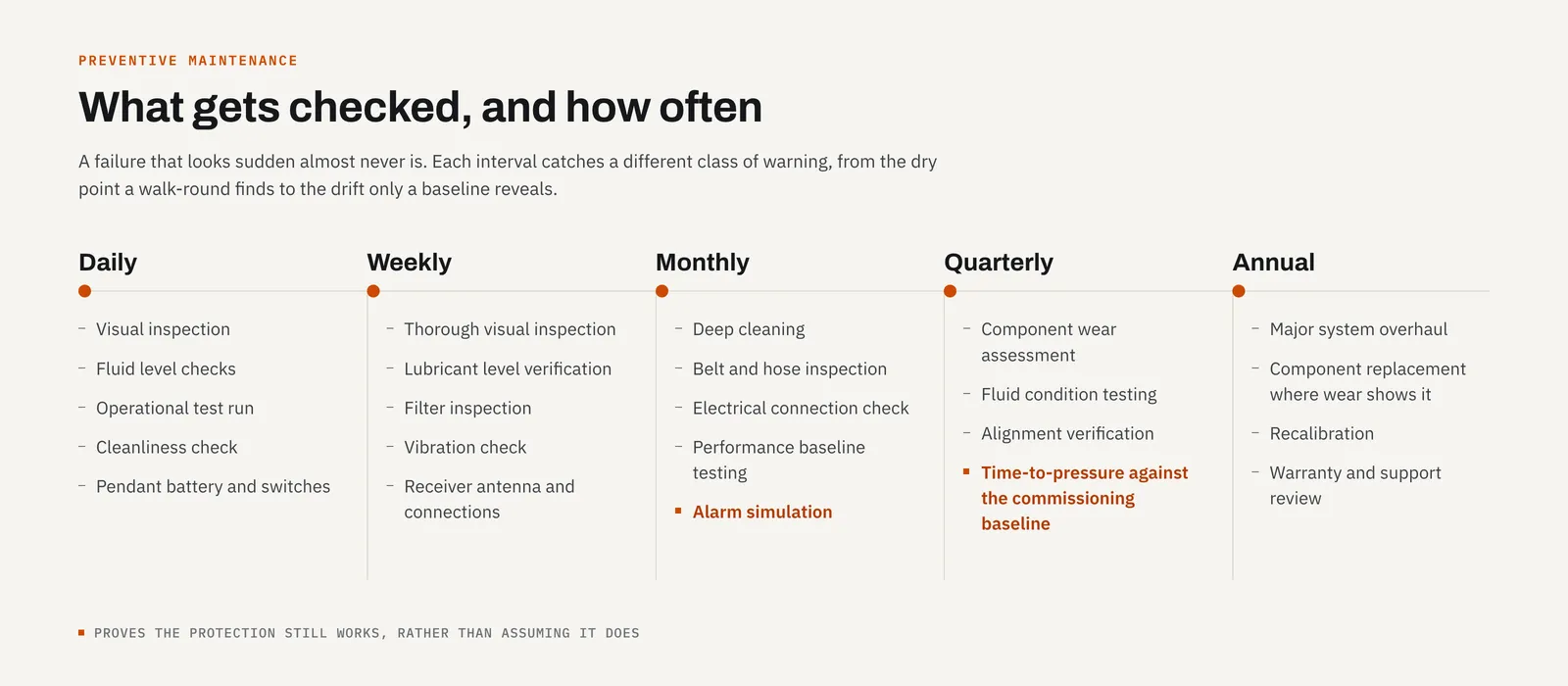
How to Build a Preventive Maintenance Plan for CNC Machines
The difference between a well-run facility and one plagued by unexpected breakdowns often comes down to one thing: preventive maintenance. Here are essential strategies for keeping your industrial equipment running smoothly, with a focus on the two systems that quietly cause most avoidable downtime: lubrication and, increasingly, the wireless controls...
Buying Guide
How to Choose the Right Lubrication System for Your Equipment
Most buyers land here already knowing roughly what a centralised lubrication system does. What they need is faster: which family, for this machine, today. This guide is five questions, not a catalogue read-through. Answer them in order and you'll have a distributor and pump family before you'd have finished reading...
Technical Guides
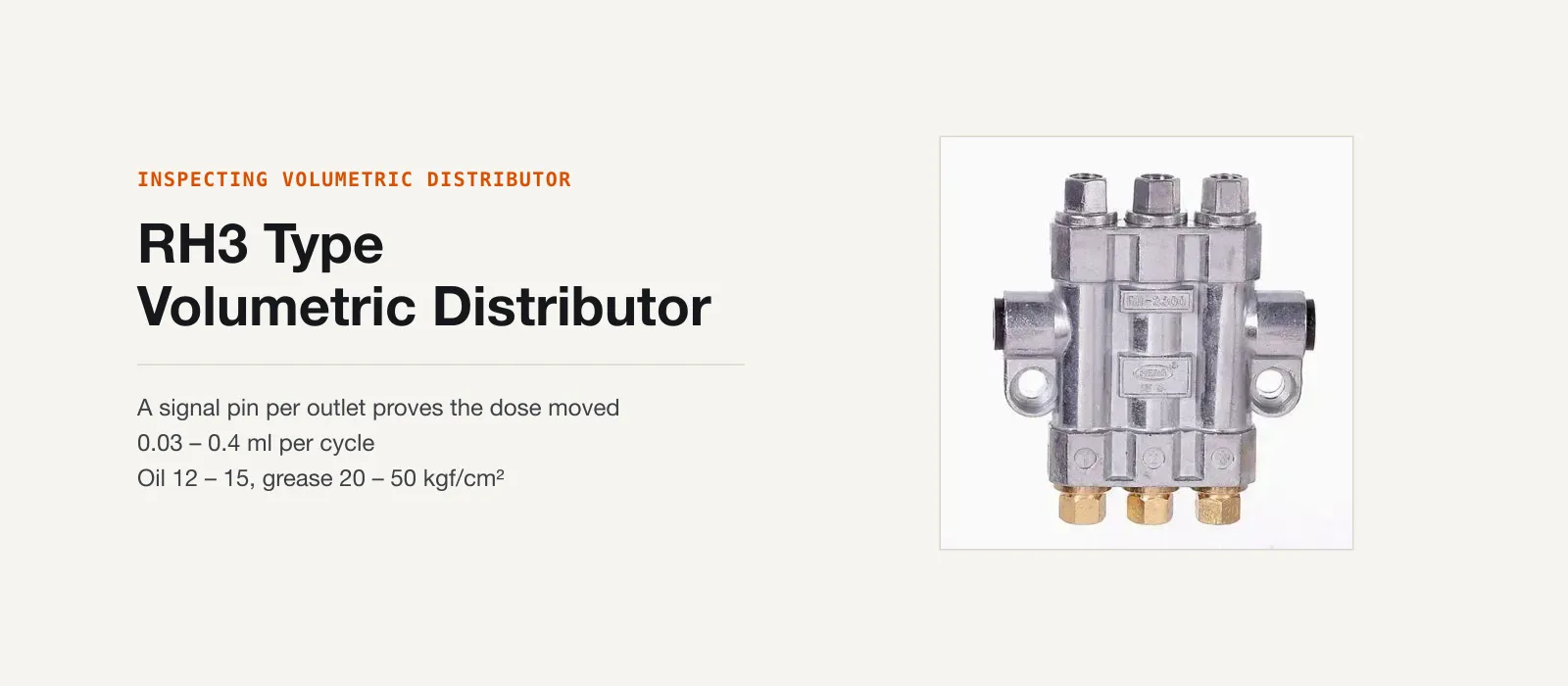
How to Read the RH3 Distributor Signal Pin for Proof of Lubrication
Centralised lubrication has an uncomfortable failure mode: it fails silently. The pump runs on schedule, the gauge climbs to pressure just like it did at commissioning, and every visible sign says the system is alive. Meanwhile a crushed feed tube behind a cover, or a metering valve jammed by a...
Technical Guides
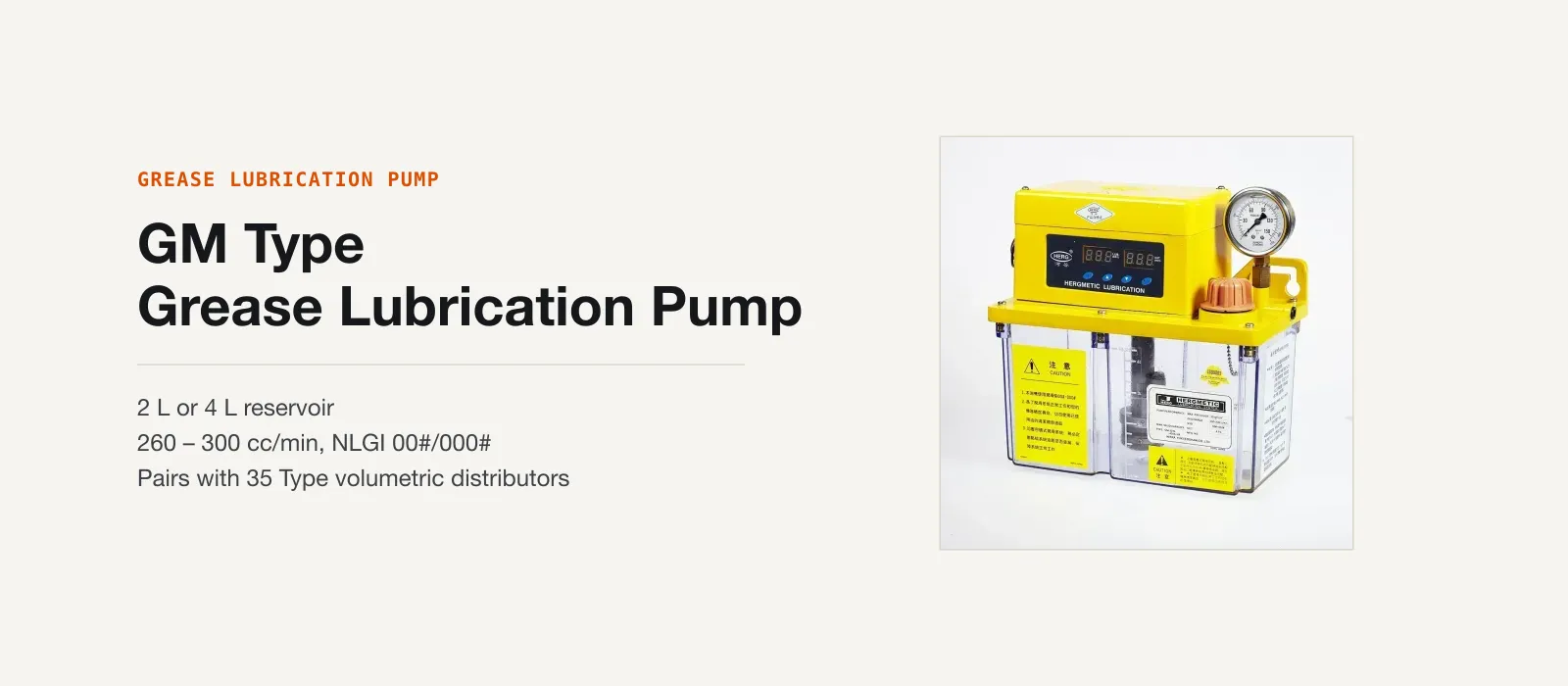
Why Centralised Grease Systems Run on NLGI 000 and 00
Ask someone to picture grease and they'll picture the stuff in a grease-gun cartridge: firm, buttery, stays where you smear it. That grease is typically NLGI 2. It's right for hand-packing a bearing and wrong for a centralised system. Loading it into one is among the costlier mistakes a maintenance...
Technical Guides
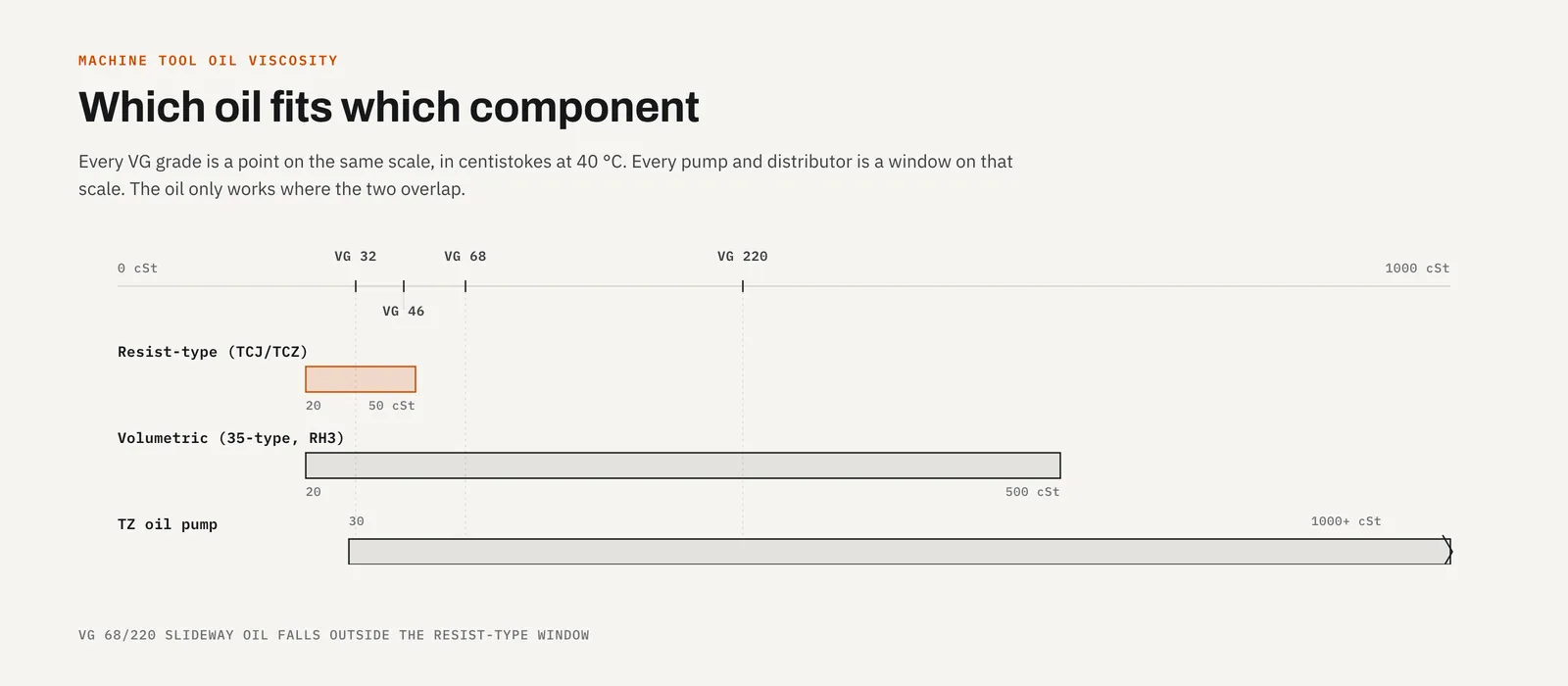
Machine Tool Oil Viscosity: What the Numbers Mean and Why Your System Cares
Every drum of machine oil carries a viscosity grade, and most people treat it like a shoe size: match the number in the manual and move on. That works until someone tops up the way-lube tank with hydraulic oil, or specs a heavy slideway oil into a metering system never...
Technical Guides
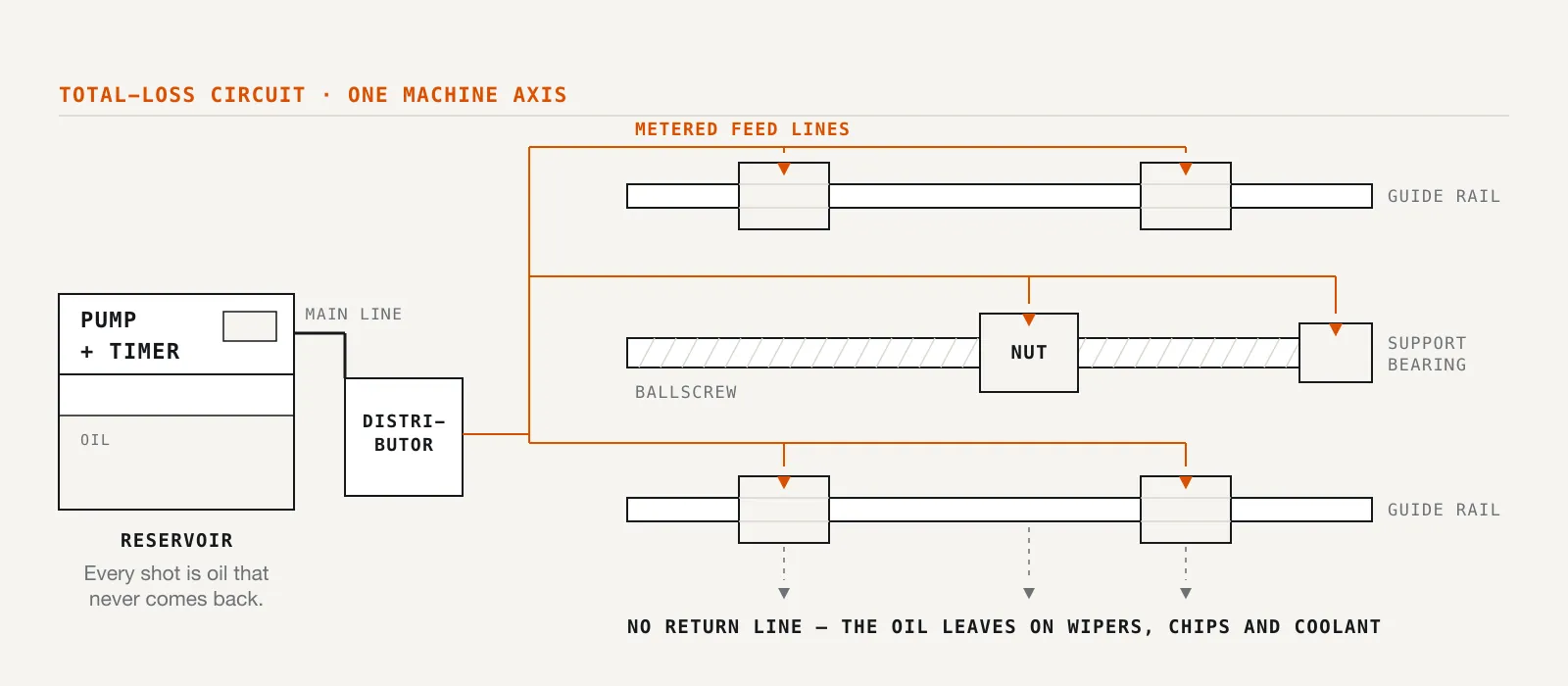
Sizing a Centralised Lubrication System: A Worked Example
Sizing a lubrication system is mostly arithmetic, and the arithmetic is short. What trips people up is that nobody shows it. Datasheets give component specs but leave assembling them into a system as an exercise. Here's that exercise, worked for one hypothetical machine: a mid-size 3-axis vertical machining centre with...
Technical Guides
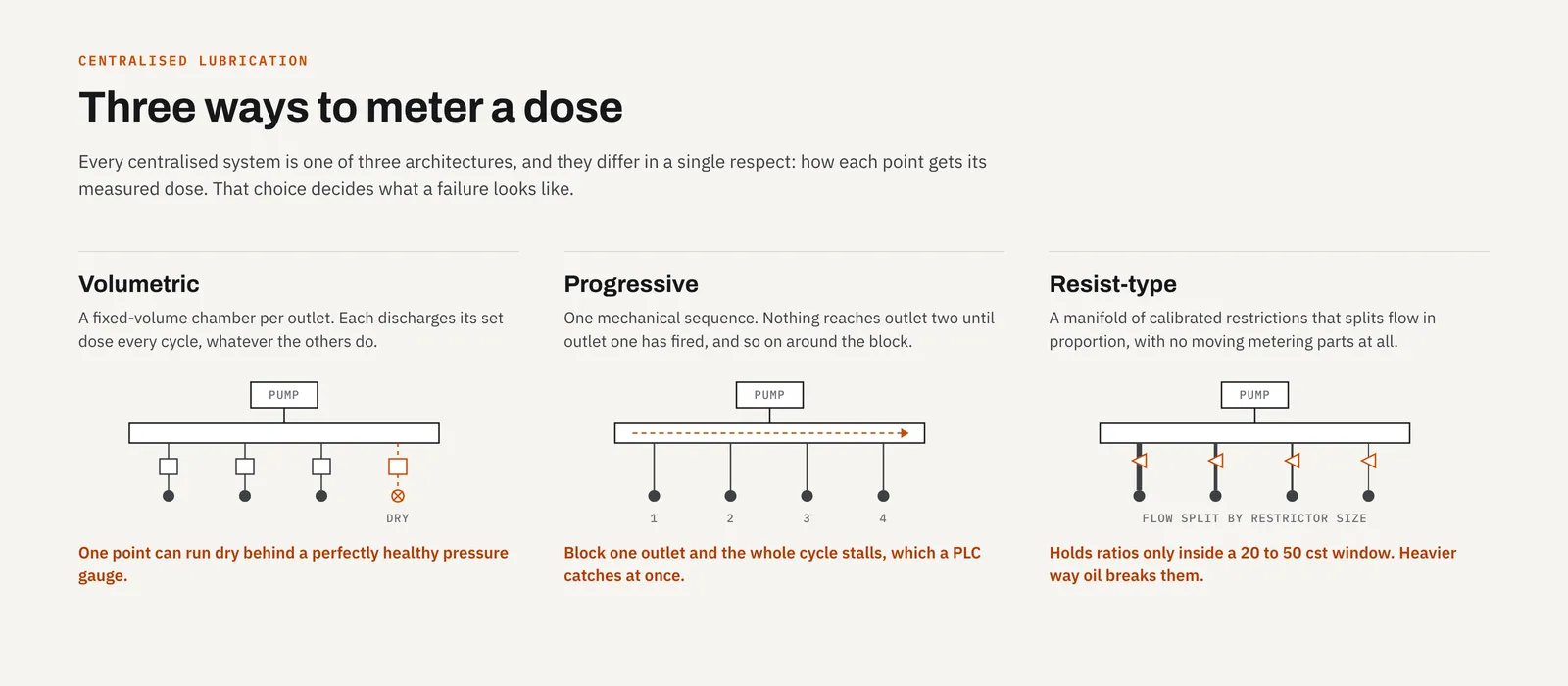
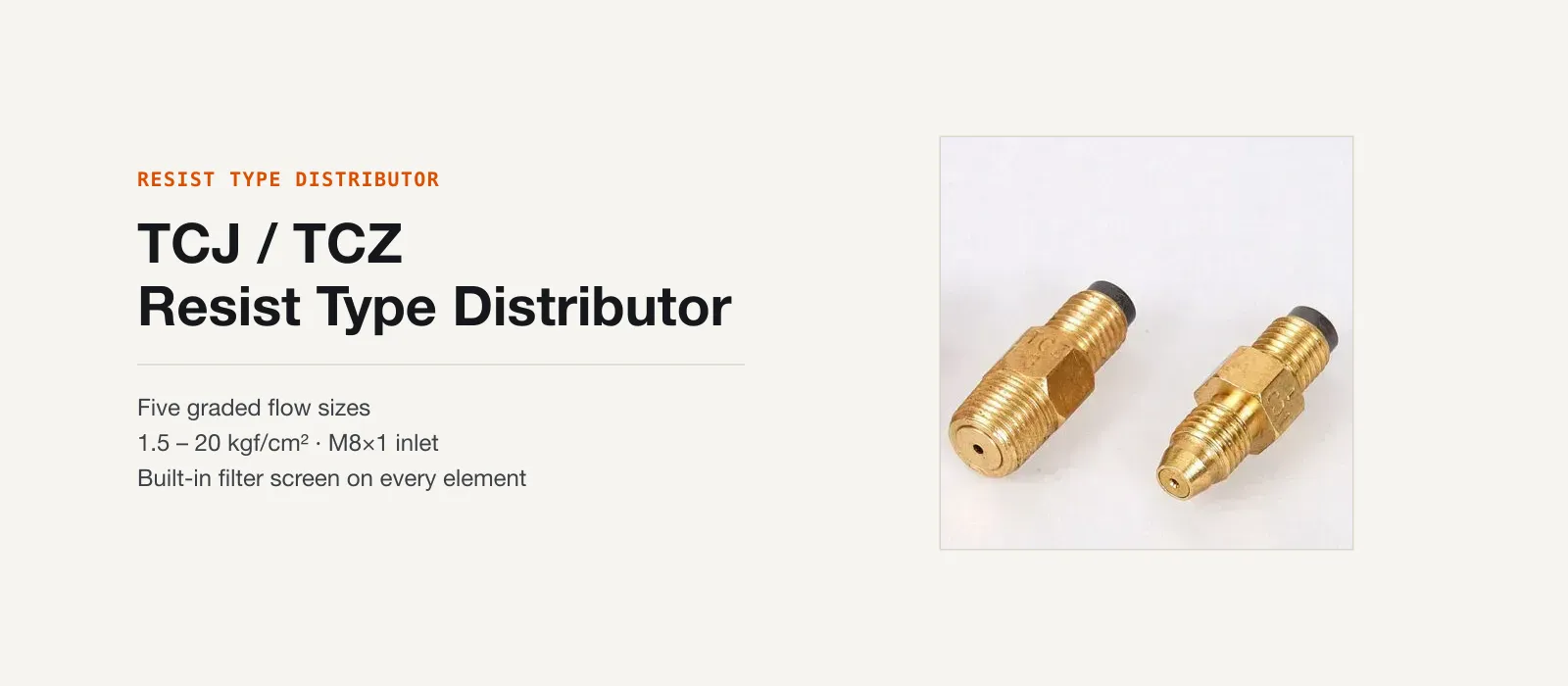
Volumetric, Progressive, or Resist-Type? Choosing a Lubrication Architecture
Every centralised lubrication system answers the same question: one pump, many points, how does the lubricant get divided? Three answers are in common use, and AMAG supplies hardware for all three. The mechanism matters more than the name on the datasheet: it determines how doses are controlled, what can be...
Technical Guides
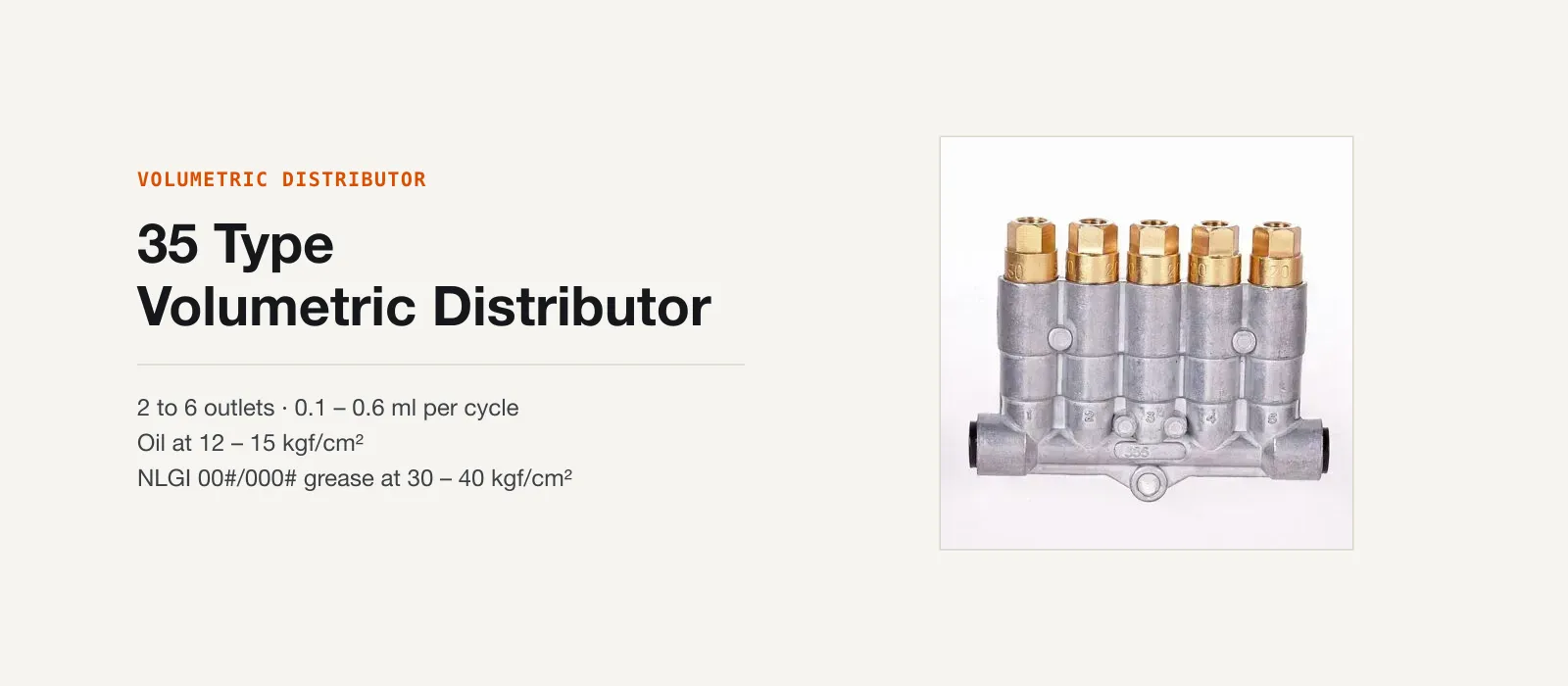
How a Volumetric Distributor Works: Metered Lubrication Explained
A lubrication pump takes oil from a reservoir and pushes it into a line under pressure. It has no opinion about where that oil ends up. On a machine with fifteen or twenty lubrication points fed through lines of different lengths and back-pressures, deciding that is the whole problem, and...