Lubrication Fittings, Tubing & Accessories
The plumbing between the pump and the point: PA / PB / PT branch fittings, PL elbows, PD unions and 3T / 4T manifolds, plus the tube, pressure switches, gauges and level indicators that complete an oil or grease circuit.
Replacing an existing lubrication system? AMAG selects tubing, fittings and adapters around the existing installation as part of a complete replacement package.
2 families · Ships pan-India
How to choose
What each fitting actually does in a circuit
A centralised lubrication circuit is a main line branching down to each point, and the fittings are what make the branches. PA, PB and PT fittings tap a branch off a Ø4 or Ø6 main line to reach one lubrication point. PL elbows take a 90° turn where the tube can't be bent into a tight point (a common need inside a crowded electrical cabinet or close to a moving axis). PD in-line unions extend a run or adapt into a distributor outlet, and the range includes the PD35612 and PD35812 adapters the 35 Type distributor specifically needs. 3T and 4T brass manifolds split one main line into three or four branch lines from a single point, all on M10×1 threads throughout the family.
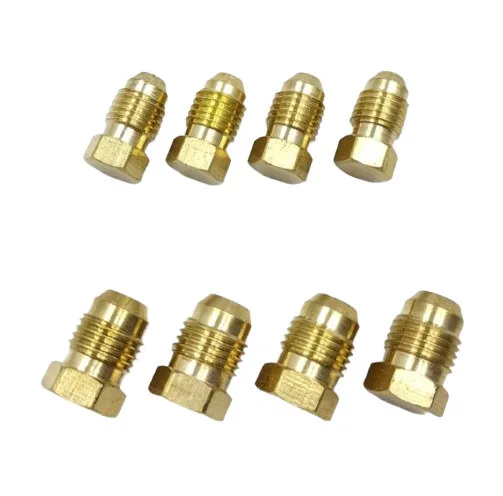
When an outlet on a manifold or distributor isn't in use, it still needs to be sealed rather than left open. That's what the PS-08Z and PS-10Z blanking dummies are for. An open outlet on a pressurised line doesn't fail loudly; it just quietly starves every other point on the circuit of pressure.
Choosing tube material and diameter
Tube for these circuits comes in nylon (Ø4, Ø6 or Ø8) and copper (Ø4 or Ø6). As general engineering guidance, nylon is the more common choice for routing flexibility on runs that bend around a machine's structure, while copper is rigid and better suited to runs near heat sources where a plastic tube would degrade over time. Check your machine builder's original routing before substituting one material for the other on an existing circuit. Whichever material is used, cut it square with a matched tube cutter rather than a side-cutter or knife: a burred cut is one of the more common causes of a blocked lubrication point, because the burr sits exactly where the tube seats into the fitting.
Diameter follows the port it's feeding: match Ø4 or Ø6 tube to a PA/PB/PT branch fitting sized for it, and confirm the distributor or manifold port size before ordering tube for a new run rather than after.
Monitoring: switch or gauge
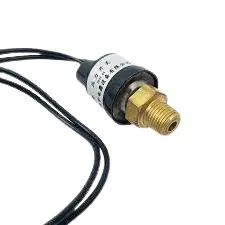
A pressure switch (5 or 10 kgf/cm² set points) and a 0–4 MPa gauge both tell you about line pressure, but they serve different jobs. The switch is what you wire into a machine's PLC or a pump's own timer circuit, so the control system gets a pass/fail signal automatically. The gauge is what you read by eye: the fastest way, at commissioning or during troubleshooting, to tell a blocked lubrication point from a pump that has simply stopped. A sight-type level indicator does the equivalent job for the reservoir: it shows oil level from outside the cabinet, without opening the tank to workshop dust every time someone wants to check it.
Filling and topping up reservoirs
For occasional top-up of a single pump reservoir or a hand-packed bearing, a grease gun is the straightforward tool. Where several machines on a shop floor all need refilling on a schedule, the motorised barrel replenish unit does the same job from a bulk barrel without opening each individual tank to airborne dust (a detail that matters more than it sounds, since grit in a reservoir is a direct cause of a jammed distributor downstream).
Tell us the machine, the number of lube points and the interval. We will name the model and the matching distributors.
WhatsApp an engineer+91 73976 31796Which fitting or accessory for which job
A quick reference across the parts in the fittings and accessories range, grounded in the grid notes in src/lib/catalogueRange.ts.
| Use case | Use it when | Key spec |
|---|---|---|
| PA / PB / PT branch fittings | Tapping a branch off a Ø4 or Ø6 main line to reach one lubrication point | Ø4 and Ø6 tube, threaded body |
| PL elbows | The tube can't be bent 90° into the point: tight cabinet or close clearance | 90° take-off |
| PN nozzle-end fittings | Terminating a line directly at an open lubrication point rather than into a fitting | Nozzle-end delivery |
| PD in-line unions | Extending a run, or adapting into a 35 Type distributor outlet | Includes PD35612 / PD35812 adapters |
| 3T / 4T manifolds | Splitting one main line into three or four branch lines from a single point | M10×1 ports throughout |
| PS-08Z / PS-10Z blanking plugs | Sealing an unused distributor or manifold outlet so the circuit stays pressurised | Blanks an M8 or M10 port |
| Pressure switch | Feeding a lubrication-OK signal to a machine PLC or a pump's own timer | 5 or 10 kgf/cm² fixed set points |
| 0–4 MPa gauge | Visual check that a circuit reached working pressure: commissioning or troubleshooting | Read by eye, no control signal |
| Sight-type level indicator | Checking reservoir level from outside the cabinet without opening the tank | Marked max and min levels |
| Nylon tube (Ø4 / Ø6 / Ø8) | General oil and grease branch and main lines needing flexible routing | Cut square with a matched tube cutter |
| Copper tube (Ø4 / Ø6) | Runs near heat, or wherever the machine builder specified a rigid line | Needs a bending tool for direction changes |
| Grease gun / motorised barrel unit | Manual top-up of one reservoir, or scheduled refilling across several machines | Hand-operated gun; motor-driven from a bulk barrel |
Fittings & AccessoriesLubrication Systems2
Frequently asked questions
What tube size do I need for my lubrication line?
Match the tube diameter to the port it's feeding: nylon comes in Ø4, Ø6 or Ø8, copper in Ø4 or Ø6, and PA/PB/PT branch fittings and manifold ports are sized against those same diameters. Confirm the distributor or manifold port size before ordering tube for a new run.
What's the difference between a pressure switch and a pressure gauge?
A pressure switch (5 or 10 kgf/cm²) is what you wire into a machine's PLC or a pump's timer so the control system gets an automatic signal. A 0–4 MPa gauge is read by eye: the quicker option at commissioning or when troubleshooting a suspected blockage, but it has no output for a control system to use.
Can I mix nylon and copper tube on the same circuit?
As general engineering guidance, nylon and copper suit different parts of a run: nylon for flexible routing, copper where a run sits near heat or needs to stay rigid. Follow the machine builder's original routing on an existing circuit rather than substituting materials without checking.
Do I need to blank an unused distributor outlet?
Yes. An open outlet on a pressurised line doesn't fail visibly. It quietly bleeds pressure and starves the other points on the circuit. The PS-08Z and PS-10Z blanking dummies seal an unused M8 or M10 port.
How do I fill grease pump reservoirs without opening a filling station?
A grease gun handles occasional top-up of a single reservoir by hand. Where several machines need refilling on a schedule, the motorised barrel replenish unit fills from a bulk barrel without opening each individual tank to shop-floor dust.
What thread size do AMAG's fittings and manifolds use?
M10×1 runs through the 3T/4T manifolds and the DK distributor's connector; other fittings and unions are sized to the tube and outlet they mate with. The PD35612 and PD35812 adapters, for example, are matched specifically to the 35 Type distributor's outlets. Check the thread stated on the part before ordering.
Related reading
A step-by-step commissioning sequence for centralised lubrication, from a clean first fill to proven oil delivery at every single point.
A symptom-first guide to centralised lubrication faults: pressure problems, dry points, stalled progressive blocks, and alarms that never fire.
Essential preventive maintenance strategies to maximise equipment lifespan and minimise unexpected downtime.
Master the essentials of CNC lubrication with our comprehensive guide covering types, best practices, and maintenance schedules.