Maintenance
Troubleshooting a Centralised Lubrication System, Fault by Fault
AMAG Team7 min read
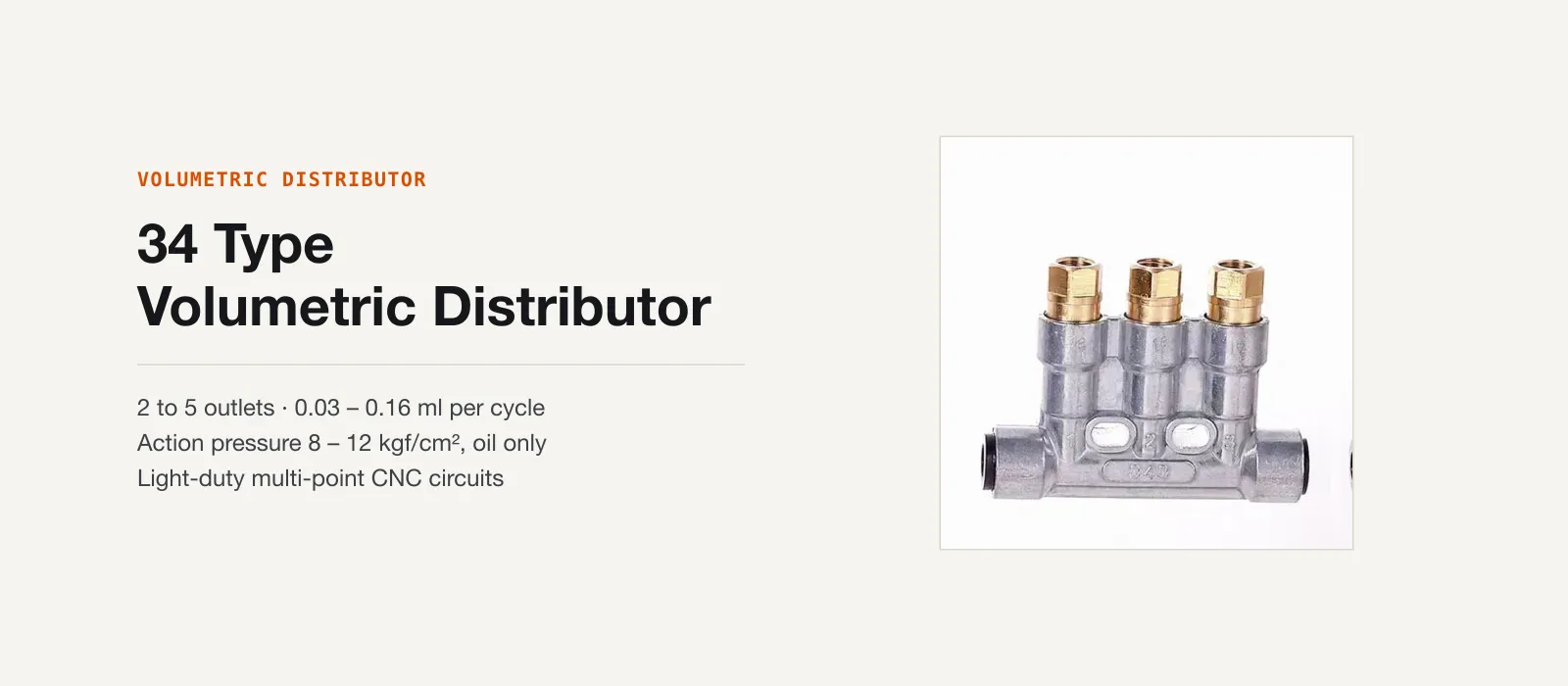
Lubrication systems are simple machines, which is why symptom-first troubleshooting works well on them. There are only a handful of things a pump-line-distributor system can do wrong, and each leaves a distinct signature.
Start from what you observe, not components. Don't pull the pump apart just because it looks mechanical. This guide runs symptom by symptom, with a summary table near the end for your phone at the machine.
Symptom 1: Pressure never reaches action pressure
In a volumetric oil system, nothing downstream happens until the main line reaches the distributors' action guarantee pressure. That figure is per family, not universal: 8–12 kgf/cm² on the 34-type and RH-2, 12–15 kgf/cm² on the 35-type and RH3. Check the number for the distributors you actually have. Below their threshold, the metering valves don't fire. A gauge that climbs partway and sags, or never climbs at all, means zero delivery: the fault sits on the supply side.
Low reservoir. Obvious enough, but the real question is why the level switch didn't alarm. An empty tank with no alarm means two faults, not one: the tank, and a switch that failed or was never wired in. Fix both (see symptom 6).
Suction-side air leak. A pump pulling air through a loose fitting or cracked pickup can't prime. It churns froth instead of moving oil. Look for a fitting anyone recently disturbed.
Burst or disconnected main line. If the pump moves oil but the line won't hold pressure, the oil is going somewhere. Check behind covers, the chip pan, and under the machine for the puddle. A disconnected push-in fitting after maintenance is a classic culprit.
Worn pump. Least common, and the most expensive conclusion to reach. If the reservoir is full, the suction side tight, and the line intact end to end, the pump is no longer making rated pressure. Bench-test it or replace it.
Symptom 2: Pressure builds almost instantly
Here's the counterintuitive one: a system that snaps to full pressure faster than it used to is just as sick as one that never gets there. Pressurising a line takes time, filling metering chambers, compressing residual air, and flexing tubing.
If the gauge hits action pressure almost instantly, it's pressurising a tiny trapped volume. The main line is blocked or crushed close to the pump, and everything beyond that point gets nothing while the gauge reads perfect.
Record your system's healthy time-to-pressure at commissioning, as we argue in the commissioning checklist. Against that baseline, both too-slow and too-fast become obvious. First check: follow the main line for a crush point. A guard screwed down through a tube path is a repeat offender.
Symptom 3: One point dry while the others are fine
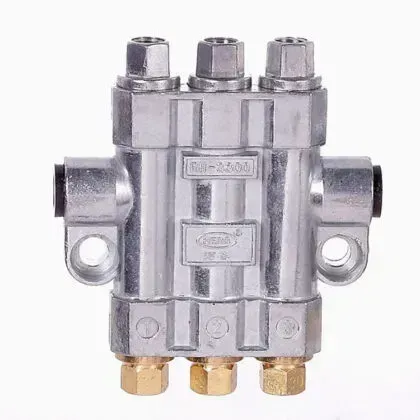 On RH3 units the signal pin turns a silent outlet into a visible one. Watch it during a commanded cycle.
This is the volumetric architecture's blind spot. Each outlet meters independently, so one starved point can coexist with a healthy gauge and normal consumption. Usually nobody spots it directly; they see a hot bearing, a scarred way, or a whining ballscrew, and work backward from there.
Two mechanisms account for nearly all cases. Either the feed tube is pinched, kinked, or swollen shut, or the metering valve is jammed, overwhelmingly from contamination: grit from a dirty top-up or an open lid, lodged in a precision valve.
Checks depend on the hardware. On an RH3 inspecting distributor, watch the signal pin during a commanded cycle: the pin's behaviour shows whether the fault is upstream or downstream. A pin that never moves points at the valve; one stuck extended points at a blocked line.
On a plain unit with no indicator, swap-test instead: move the suspect tube to a known-good outlet, or vice versa, and run a cycle. The new pairing tells you which side is at fault.
Symptom 4: Progressive system alarms or stalls
A series-progressive distributor turns any single blocked point into a full stop. The pistons fire in sequence, so the sequence halts at the blocked outlet, and the cycle-monitoring alarm (if fitted) trips.
The fix uses the same mechanism in reverse: crack outlet fittings one at a time with the pump running. When cycling resumes, the last fitting you opened is the blocked line. Full reasoning, and the monitoring logic, is in progressive distributors and PLC monitoring.
One more check before you assume a blockage: SD-series blocks need 1.4 MPa at the inlet to shift the pistons. A tired pump or a supply leak below that threshold can mimic a blocked point. Verify supply pressure first, crack fittings second.
Symptom 5: The reservoir empties faster than it used to
Consumption is worth trusting, but read it carefully. There are three different explanations.
First, the settings changed: check the timer interval and dose against the lube card. An interval shortened during troubleshooting and never restored is a common find.
Second, a leak. A weeping fitting or split tube dumps oil that never reaches a bearing, becoming an extra, unmetered "point." Follow the smell and check for wet spots below tube runs.
Third, on machine-tool way lube specifically, nothing may be wrong at all. Way and ballscrew oiling is total-loss by design, so consumption is the system working. What looks new is sometimes just more spindle hours, or a normal rate someone's noticing for the first time. Know your baseline before hunting a leak; we cover that, and how it interacts with timer settings, in total-loss lubrication and timer setup.
Symptom 6: The alarms that never fire
This is the quietest fault of all: a protective switch that isn't protecting anything. A reservoir level switch, or the optional pressure switch on the TZ pump at 5 or 10 kgf/cm², only helps if it's wired into the alarm chain and the machine reacts when it opens. An unwired switch is decoration.
Test it on a schedule, not just at commissioning. Lift the level float, or run the reservoir low during an attended cycle, and confirm the machine annunciates. If fitted, confirm a lube-pressure fault appears on the control when the line can't make pressure.
The summary table
| Symptom | Most likely cause | First check |
|---|---|---|
| Pressure never reaches action pressure | Low reservoir; suction air leak; burst/disconnected main; worn pump | Reservoir level, and why the level switch didn't alarm |
| Pressure builds almost instantly | Main line blocked or crushed near the pump | Walk the main line out from the pump for crush points |
| One point dry, others fine | Pinched feed tube or jammed metering valve (contamination) | RH3: watch the signal pin; plain units: swap-test the tube |
| Progressive block stalled / cycle alarm | One blocked outlet, or supply below 1.4 MPa starting pressure | Verify inlet pressure, then crack outlets one at a time |
| Reservoir empties fast | Changed settings; leaking line; normal total-loss consumption | Compare timer/dose against the machine's lube card |
| No alarm despite real fault | Switch not wired into the alarm chain | Simulate the fault (lift the float) and watch the control |
The root cause behind the root causes
Run enough of these diagnoses and a pattern emerges. Most jammed metering valves, and a fair share of blocked progressive outlets, trace back to contamination entering through the reservoir's top: dirty transfer containers, the wrong funnel, lids left open over a weekend of grinding dust.
The fix is boring discipline: dedicated clean containers, closed lids, correct oil from a sealed source.
If you've worked through a symptom and the system still won't behave, or the same fault keeps returning, contact us with your pump and distributor models and what you've observed, and we'll help you run it to ground.
Sometimes the diagnosis is that the pump or distributor itself is past its working life rather than one fault away from fixed. In that case, send a photo of the existing pump or nameplate and see our centralised lubrication system replacements: we configure the pump, distributor, tubing and fittings as one package around the machine you already have.
Frequently asked questions
What are the most common problems with a central lubrication system?
Six patterns cover nearly every case: pressure that never reaches the distributors' action pressure, pressure that builds suspiciously fast (a sign of a crushed line), a single dry point on an otherwise healthy volumetric system, a stalled or alarming progressive block, a reservoir emptying faster than normal, and an alarm switch that's wired to nothing. Each leaves a distinct signature, so diagnosis starts from the symptom, not the component.
Why is oil pressure not reaching the distributors?
Check, in order, the reservoir level (and why its low-level switch didn't alarm), a suction-side air leak preventing the pump from priming, a burst or disconnected main line dumping oil before it reaches the distributors, and, last, a worn pump no longer making rated pressure. Action pressure is per distributor family, 8-12 kgf/cm² on the 34-type and RH-2, 12-15 kgf/cm² on the 35-type and RH3, so confirm the threshold for the hardware actually fitted.
Why is only one lubrication point dry when the others work fine?
On a volumetric system each outlet meters independently, so one starved point can coexist with a normal gauge reading. The two causes that account for nearly every case are a pinched or swollen feed tube and a metering valve jammed by contamination. On RH3 distributors, watching the signal pin during a commanded cycle shows which side is at fault; on plain units, swap-test the tube to a known-good outlet.
What causes a progressive lubrication system to stall or alarm?
A series-progressive distributor fires its outlets in sequence, so one blocked outlet halts the whole cycle and trips the monitoring alarm if one is fitted. Crack outlet fittings one at a time with the pump running; cycling resumes once you open the blocked line. Rule out low supply pressure first, SD-series blocks need 1.4 MPa at the inlet to shift their pistons, since a tired pump can mimic a blockage.
Related articles
Maintenance
Keeping Wireless Controls Reliable on a Noisy Shop Floor
Why machine shops are hard on radio links, and how receiver placement, cable routing, and honest battery habits keep a wireless pendant dependable.
Maintenance
Commissioning a Lubrication System: From First Fill to First Cycle
A step-by-step commissioning sequence for centralised lubrication, from a clean first fill to proven oil delivery at every single point.
Maintenance
Wireless MPG Maintenance and Troubleshooting - Keep Your Controls Working
Routine housing, button and switch care for a wireless MPG pendant, plus fault signatures that trace to the hardware, not the radio link or a dead AA battery.