Grease Lubrication for Wind Turbines
Main, pitch, blade and yaw bearings and the generator: the high pressure progressive class, where full pump pressure reaches every point in turn.

The lubrication circuit
Grease · System 01
High pressure progressive system
The grease catalogue files wind energy as high pressure, ZJ with SD3 blocks.
Build
ZJ series piston pump + SD or U-shaped progressive distributors
Dose
NLGI 1# and 2#, also 0# / 00# / 000#
Pressure
16 – 32 MPa · ZJ set to 30 MPa
A piston pump raises grease to as much as 30 MPa and feeds a master progressive distributor, which feeds secondary distributors, which feed the points in sequence. Full pump pressure reaches every point; none of it is divided. A blocked point raises system pressure until grease leaves the safety valve, so the circuit monitors itself.
Where it runs
Wind energy
Main, pitch, blade and yaw bearings, and generators in wind turbines
High pressure · ZJ + SD3
Core circuit products
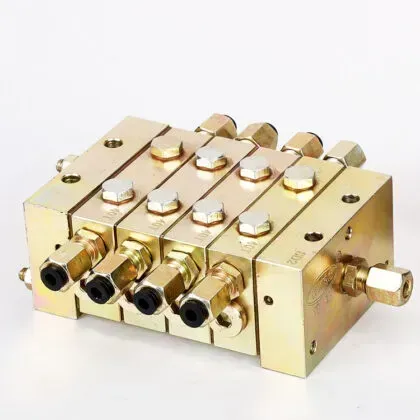
SD block-type progressive distributor feeding 1 to 20 points strictly in sequence at up to 25 MPa. SD1, SD2 and SD3 series, 3 to 10 working blocks.
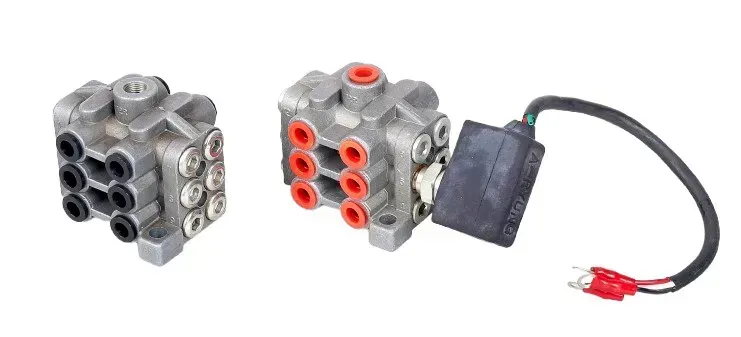
One-piece progressive valve feeding 4 to 12 points at 0.3 ml per cycle each, rated 15 MPa. No blocks to assemble and no joints to leak.
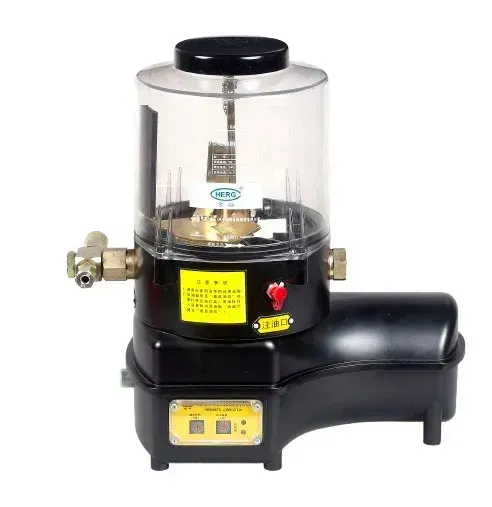
DC 12 V or 24 V piston grease pump rated 30 MPa, handling NLGI 000# to 2# grease from a 2 to 8 L reservoir. Drives high-pressure progressive circuits.
Related reading
NLGI 2 belongs on a 30 MPa progressive circuit, not a GM or 35-type reservoir. The three grease pressure classes decide the grade, and what mixing them costs.
How series-progressive distributors and a simple PLC pattern turn lubrication from an act of faith into a checkable interlock, with SD-series details.
Master the essentials of CNC lubrication with our comprehensive guide covering types, best practices, and maintenance schedules.
Frequently asked questions
Which circuit class do turbine bearings need?
The high pressure progressive class. A ZJ series piston pump raises grease to as much as 30 MPa and feeds a master progressive distributor, which feeds secondary distributors, which feed the points in sequence. The grease catalogue files wind energy under ZJ with SD3 blocks, on NLGI 1# and 2# grease; 0#, 00# and 000# also run.
Why progressive rather than volumetric here?
Points are fed one after another from a single pressure source. Full pump pressure reaches every point in turn (nothing is divided), so a progressive circuit will push grease into a bearing that a volumetric circuit cannot.
What happens if one point blocks?
The whole assembly stops and system pressure rises until grease leaves the safety valve at the pump. That is the design intent: the circuit reports its own failure. A volumetric circuit does the opposite: one blocked branch starves one point and leaves the rest running.
How is the circuit monitored from the ground?
The ZJ pump takes pressure and level switches for remote monitoring, and runs on a time-programme or time-travel controller. At the block, SD working blocks are available with a mechanical indicator pin and with an electric micro-switch indicator pin; the U-shaped integrated distributor's M models carry a cycling feedback switch.
Get a quote for your wind energy circuit
Tell us the machine and the number of lube points. We reply with a part list.